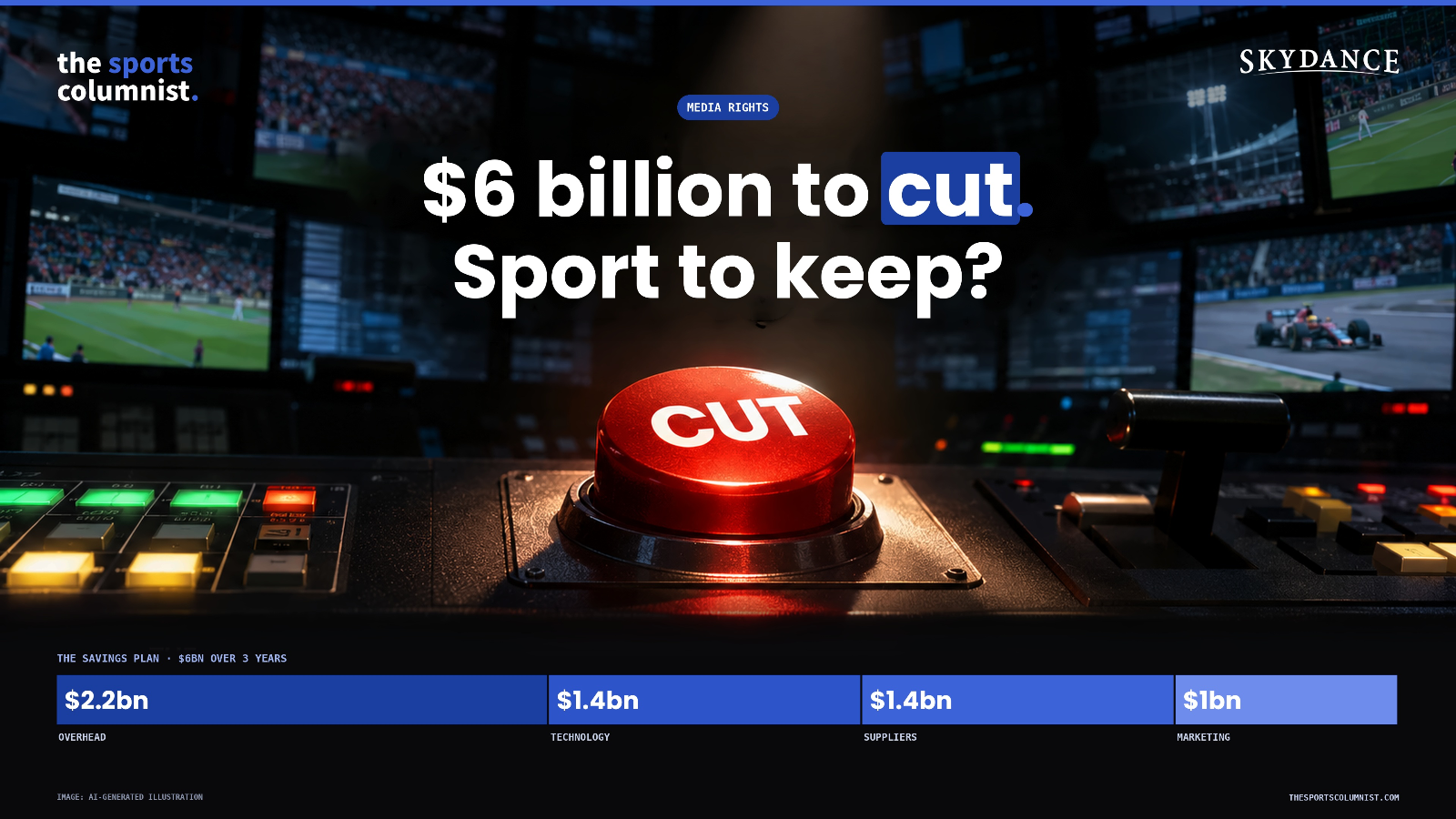
The newly merged Skydance is now one of the biggest owners of sport on American television, and one of the most indebted. Its plan to fix that is simple to say and hard to do: cut at least $6 billion in costs over three years. The Skydance $6 billion cost savings plan will shape what happens to some of the most valuable sports rights in the world.
What happened
Skydance has explained, for the first time, where the savings will come from. Skydance laid out a plan to cut at least $6 billion in costs within three years after closing its acquisition of Warner Bros. Discovery. It expects the savings to come from merging duplicate streaming platforms, studio units, television networks and corporate departments, all within a cost structure that exceeds $50 billion.
It also confirmed a big product move: it would launch a streaming bundle of HBO Max and Paramount+ early next year. Investors weren’t thrilled: shares of the company dropped about 2% to $8.50 in after-hours trading.
Where the $6 billion comes from
The company broke the savings into four buckets:
Overhead: at least $2.2 billion in cost reductions from eliminating “redundant back-office and corporate functions,” including eliminating management layers and ramping the use of artificial intelligence.
Marketing: $1 billion, or 20%, from marketing costs. bworldonline
Technology: around $1.4 billion in savings will come from unifying its streaming businesses and broadcast architecture and integrating back-end technology.
Suppliers: a final $1.4 billion in savings will be tied to “optimizing third-party spend,” eliminating overlapping expenses, and consolidating purchasing decisions to one centralized group.
The timeline is quick: the company expects to realise approximately 30% of its annualised savings target in the first year and 70% by the end of the second year, with the full target to be achieved within three years.
Why the cuts matter: the debt
This is really a story about debt. Skydance completed the Warner Bros. Discovery acquisition funded with $47 billion of new equity and $57 billion of new secured debt. The combined company is carrying $87 billion of gross debt.
The savings are central to the whole deal. As Bloomberg reported from the debt documents, the investment thesis relies heavily on achieving the cost savings, which would boost expected earnings before interest, taxes, depreciation, and amortization to $18.7 billion on an annualized basis, up from $12.7 billion previously. The goal: reduce net leverage to 3.0x by the end of 2029, reaching investment-grade credit metrics within approximately three years of closing.
Saving money also costs money: achieving those savings will cost roughly $4 billion in cash, including $1.5 billion to $2 billion in 2027. Forbes
Where sport fits in
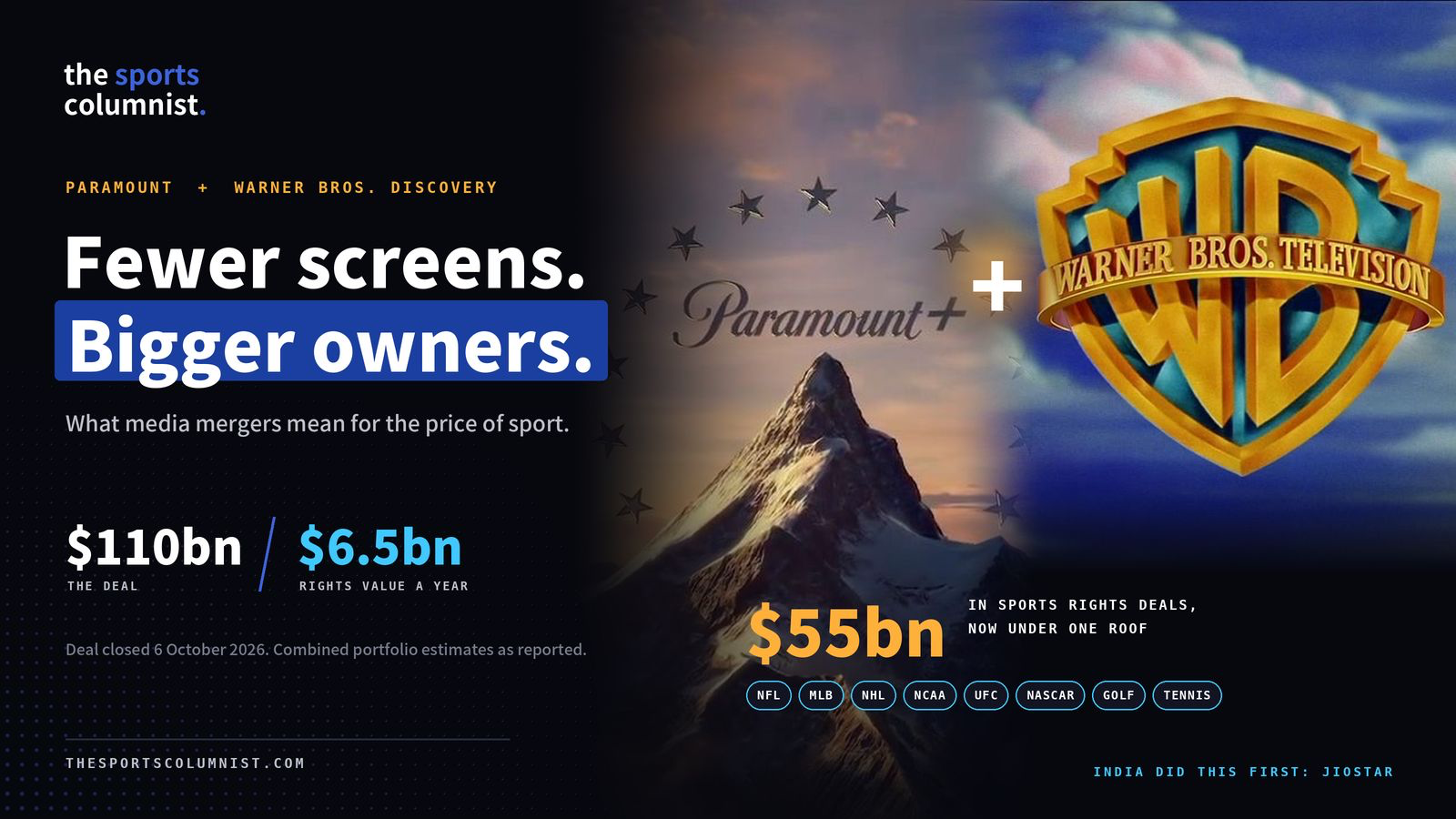
The merger puts a huge sports portfolio under one roof: CBS Sports, TNT Sports, the UFC deal on Paramount+, and the sports content on HBO Max. Industry coverage has called the combined business a force in sports media, and it’s already expanding: one recent report said Skydance tipped to widen US reach for UFC, Zuffa.
In our view, sport sits in an unusual place in this plan:
It’s the one thing they can’t cut. Live sport is what keeps people subscribed and advertisers paying. Cutting rights to save money would weaken the very bundle Skydance is building.
But everything around it can change. The savings target marketing, technology and duplicate operations, which means fewer separate sports apps, combined production teams, and shared studios and graphics. Viewers may notice sport moving between channels and apps as the company merges them.
Bundles change the value of rights. An HBO Max and Paramount+ bundle puts more sport in one place, which can make each sports deal more valuable to Skydance, and give it more bargaining power when rights come up for renewal.
Debt changes how it bids. With $87 billion of debt, Skydance may be more careful about expensive new rights, and focus on getting more value from the rights it already owns.
As one analyst put it, the risk is cutting too deep: “Content remains the lifeblood of the business, and Skydance cannot afford to compromise its ability to invest in compelling programming.” He called the savings target “ambitious but achievable,” though the size of the debt left little room for error.
A familiar story in India
Indian readers have seen a version of this before. The merger that created JioStar brought most of India’s biggest cricket rights under one company, followed by efforts to combine platforms and cut duplicate costs. In our view, the lesson is the same in both markets: when broadcasters merge, leagues lose a bidder, and the next round of rights negotiations gets harder for the sellers.
The question that matters
Can Skydance cut $6 billion without cutting the sport that makes its bundle worth paying for? If it gets the balance right, it becomes one of the most powerful buyers of sports rights in the world. If it cuts too deep, the leagues and fans will feel it first.
At The Sports Columnist, we cover the deals, the money and the decisions behind sport. Every game has a second scoreboard, and in sports media, it’s now being kept by the accountants.
Sources: Skydance shareholder letter and SEC filing (Q3 2026); reporting by CNBC via Quartz, Reuters via BusinessWorld, Forbes, Bloomberg,
Read more from The Sports Columnist
→ Sports media mergers: what Paramount and Warner Bros mean for sport
→ Disney and Adobe are bringing AI to ESPN. Could sports archives become the next big commercial asset?
→ Get The Dugout, our free newsletter, every Monday

comments.
0 commentsNo comments yet. Be the first to join the conversation.