The world’s sports media is shrinking into fewer, bigger hands. In the US, Paramount has completed its takeover of Warner Bros. Discovery, putting CBS Sports and TNT Sports under one roof and creating a company with tens of billions of dollars committed to sports rights. India went through its own version of this when JioStar was formed. The question for leagues, fans and smaller sports everywhere is the same: what happens to the price of sport when there are fewer buyers?
What happened
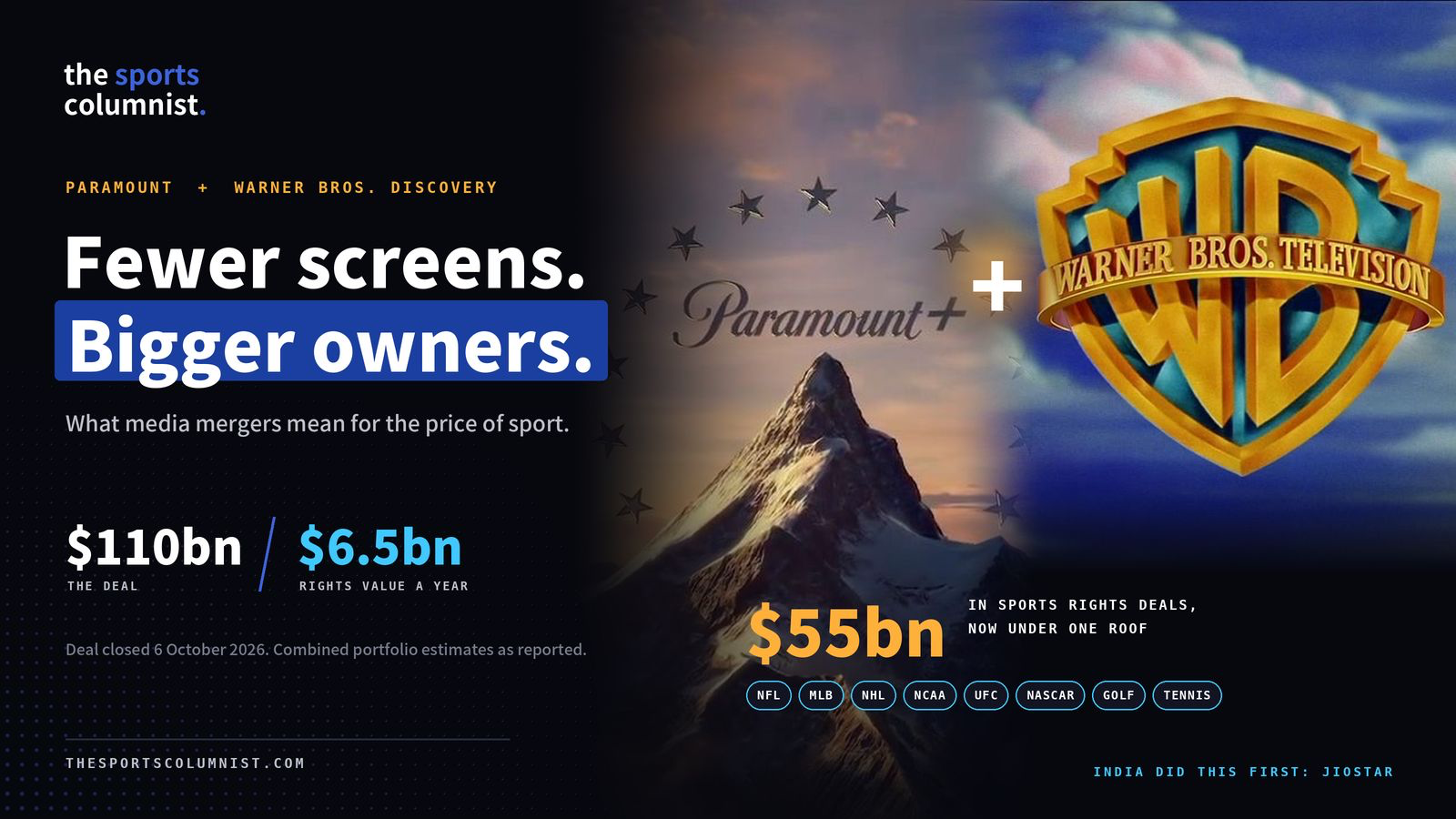
The $110bn deal will see WBD and Paramount merge under a combined company called Skydance, bringing both companies’ film studios, television shows and streaming platforms together. The deal was closed on October 6 after receiving all required regulatory approvals.
It wasn’t a straight road. In December 2025, Netflix won the bidding war to buy WBD’s streaming and studios business for $82.7 billion, but Paramount Skydance outbid it with a $110.9 billion offer for the entire company on February 24, 2026. Paramount then settled an antitrust lawsuit with a dozen states, clearing the last major obstacle.
The sports at stake
The sports side is huge. The combined sports rights portfolio of Paramount and WBD has an estimated $6.5bn in annual value, while its total multi-year agreements are valued at approximately $55bn.
The combined sports divisions boast a substantial amount of live sports rights, including the NFL, the NCAA men’s basketball tournament, the College Football Playoff, MLB, the NHL, UFC, NASCAR, golf, tennis and more. Some of the individual deals are big on their own: WBD has a rights agreement with Major League Baseball until 2028 for $535m per year, and a NASCAR deal worth $275m per year that expires in 2031.
There’s one notable gap. The combination would have touchpoints in nearly every major pro and college sports entity in the US, with the notable exception of the NBA. TNT lost its NBA rights, and a recent WBD earnings report showed a sizable drop in ad sales without the presence of that league. That’s a reminder of how much one league can be worth to a broadcaster.
Scale wins in sports rights. Live sport is one of the few things people still watch live, with adverts, so rights keep getting more expensive. Bigger companies can afford bigger bids.
One company, many screens. A merged group can spread its sport across broadcast TV, cable and streaming. Analysts expect TNT Sports properties may move onto Paramount+, and the TNT Sports brand will, in all likelihood, be rolled into CBS Sports.
Losing a league hurts. TNT’s ad slump after losing the NBA shows the risk of being too small to hold onto the biggest rights.
India has already seen this movie
India went through the same shift when Reliance’s Viacom18 and Disney’s Star India combined to form JioStar, bringing many of the country’s biggest cricket rights, including the IPL and ICC events, under one company and one streaming app, JioHotstar.
The logic was the same: scale, one platform, and the financial muscle to hold onto the rights that matter most. In our view, the effects to watch are the same too.
What fewer, bigger broadcasters mean
For rights prices: less competition, more pressure. Rights fees rise fastest when several deep-pocketed bidders compete. When rivals merge, there are fewer bidders. That doesn’t mean prices fall, as top properties like the IPL or the NFL will always attract interest, but leagues lose some bargaining power, especially in the middle tier.
For fans: one app, but maybe a higher bill. Consolidation can make sport easier to find, with everything on one platform. But it can also mean fewer free options and more of the game behind a paywall, as companies look to recover what they paid.
For smaller sports: a risk and an opportunity. A giant broadcaster focused on its biggest properties may pay less attention to smaller leagues. But it can also bundle them alongside major events and bring them a far bigger audience, if they’re part of the package.
How leagues are fighting back
As broadcasters get bigger, leagues are looking for other routes to fans:
Going free and digital: as we wrote in Free football, millions of viewers: is the ISL’s YouTube bet working?, some leagues are choosing reach over rights fees.
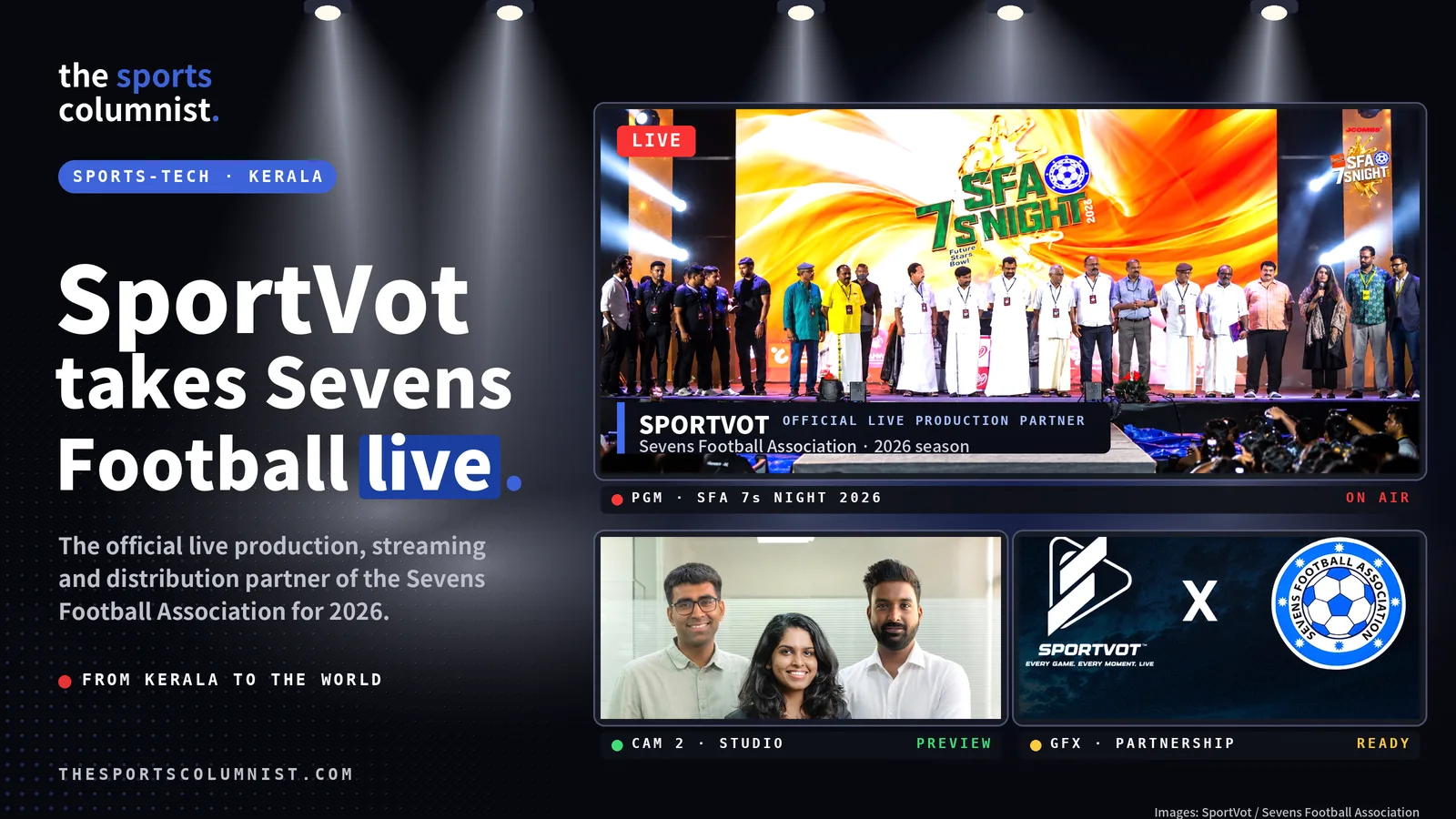
Specialist streamers: platforms like SportVot are building the production and streaming layer for sports that big broadcasters don’t serve, from women’s football to Kerala’s Sevens Football.
Taking rights in-house: some organisations are now managing and selling their own rights rather than relying on a single buyer.
The question that matters
As sports media consolidates into a few giants, will leagues and fans get more, or pay more? The Paramount–Warner Bros deal is the latest sign that the screens are getting bigger and the owners fewer. The leagues that thrive will be the ones that don’t depend on a single buyer.
At The Sports Columnist, we cover the deals, the money and the decisions behind sport. Every game has a second scoreboard, and the companies that control the screens now keep a lot of the score.
Sources: company announcements and regulatory filings on the Paramount–Warner Bros. Discovery deal, October 2026.
Read more from The Sports Columnist
→ Free football, millions of viewers: is the ISL’s YouTube bet working?
→ Jio Platforms is now listed. What does it mean for Indian sport?
→ Kerala’s Sevens Football has the fans. Now it has a streaming partner.
→ Get The Dugout, our free newsletter, every Monday

comments.
0 commentsNo comments yet. Be the first to join the conversation.