
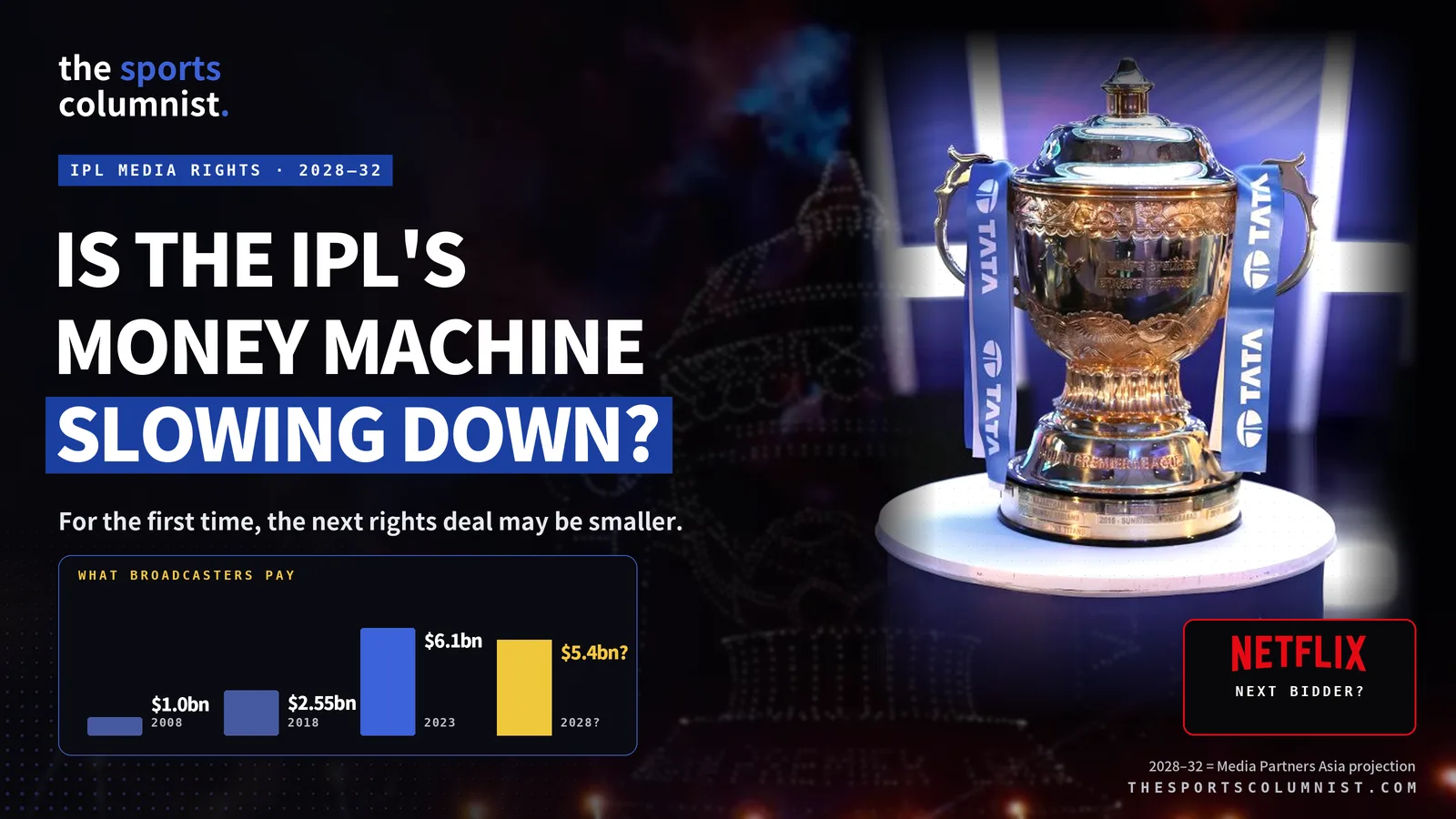
This week, resale tickets for Game 1 of the World Series passed $3,000, close to Super Bowl prices. Live sport has never been more expensive to watch in person. But the money from IPL media rights, the biggest league in Asia, may be about to stop growing.
A new report from Media Partners Asia (MPA), published on 9 October, calls the IPL the only sports property in Asia-Pacific "priced at the top of the global market". The same report says growth in sports rights fees across the region will slow from about 10% a year since 2021 to just 1% to 2% a year through 2030.
"This is not the end of sport's boom in Asia Pacific," said MPA chief executive Vivek Couto. "It is the end of the easy part."
The rights at a glance
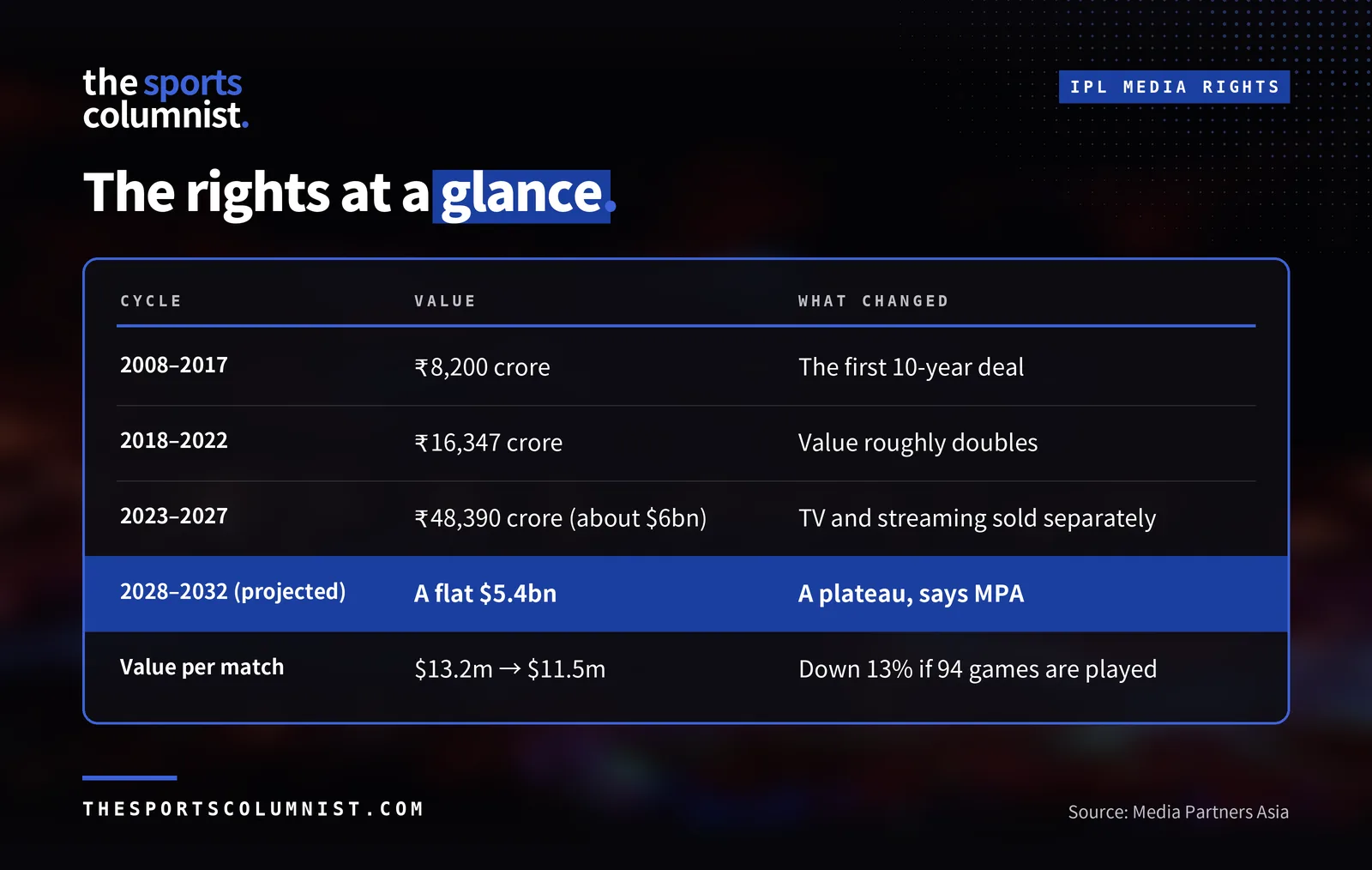
Since 2008, every IPL rights auction has ended in a bigger number. The first deal in 2008 was worth ₹8,200 crore over ten years. The current cycle, 2023 to 2027, sold for ₹48,390 crore, about $6bn, split between Disney Star's TV deal ($3.02bn) and Viacom18's streaming deal ($3.05bn).
MPA's forecast for the next cycle, 2028 to 2032, is about $5.4bn. If the league expands to 94 games a season, the value of each match would fall 13%, from $13.2m to $11.5m. For the first time, the line would stop going up.
Why the growth is slowing
Three things that pushed the price up in 2022 have changed.
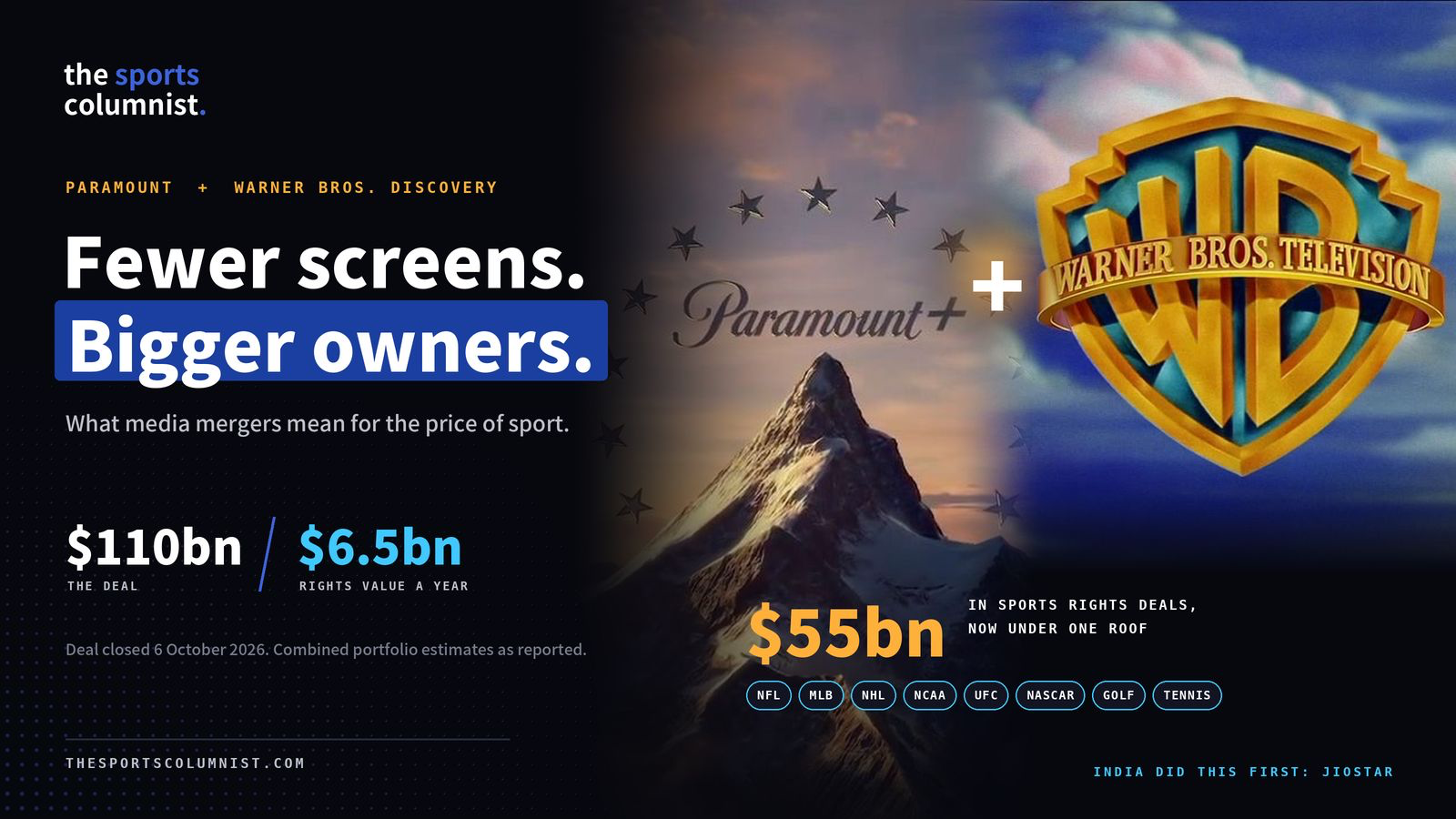
There is now one big buyer. In 2022, Disney Star and Viacom18 bid against each other. They have since merged into JioStar, which runs JioHotstar. Fewer bidders means less pressure on the price.
Broadcasters are losing money. MPA estimates broadcasters will lose $1.8bn to $2bn across the current cycle. Companies that lose money on a deal rarely pay more for the next one.
Two big advertising categories are gone. India's ban on real-money gaming ads, and limits on crypto advertising, removed some of the IPL's biggest spenders. IPL ad revenue grew about 7% a year over the last three seasons, down from 18% in the previous cycle.
There is a wider shift too. Across Asia-Pacific, streaming platforms now pay 50% of all sports rights fees, up from 36% in 2021. But MPA's fan research found that only 3% of lapsed fans came back to a sport because it was on a platform they already used. Owning the rights no longer guarantees the audience, even as global streamers chase live sport, as the Netflix World Cup deal showed.
comments.
0 commentsNo comments yet. Be the first to join the conversation.