
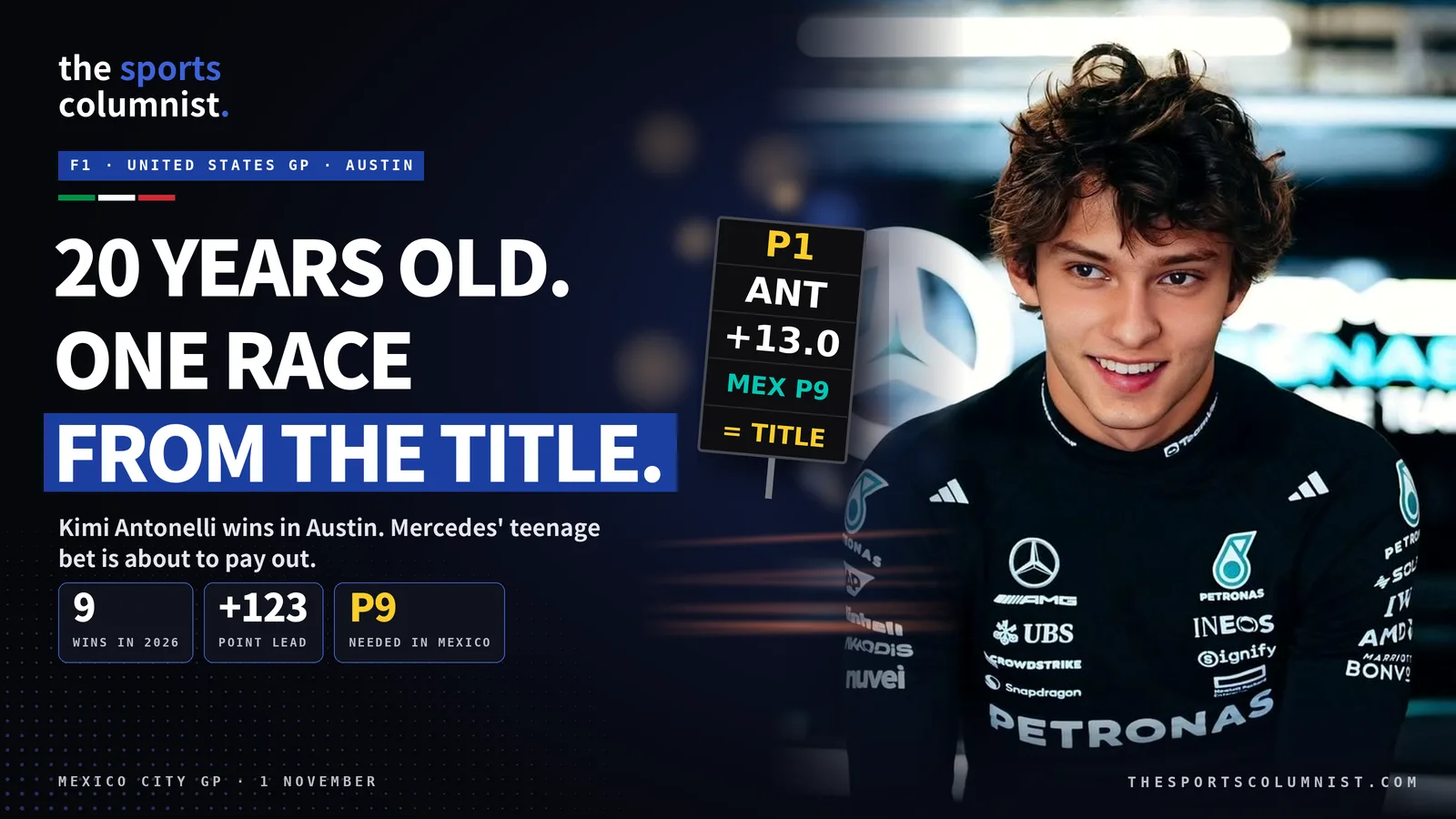
Andrea Kimi Antonelli won the United States Grand Prix at the Circuit of the Americas on Sunday, and he is now one race away from becoming Formula 1's youngest-ever world champion. The 20-year-old Mercedes driver started from pole, led from the first lap and finished 13.078 seconds ahead of Ferrari's Charles Leclerc. Red Bull's Max Verstappen was third.
It was his ninth win of the season. Mercedes kept him on a one-stop strategy, switching to hard tyres on lap 24, while Red Bull committed Verstappen to two stops. His teammate George Russell started sixth and picked up a five-second penalty for leaving the track on the first lap.
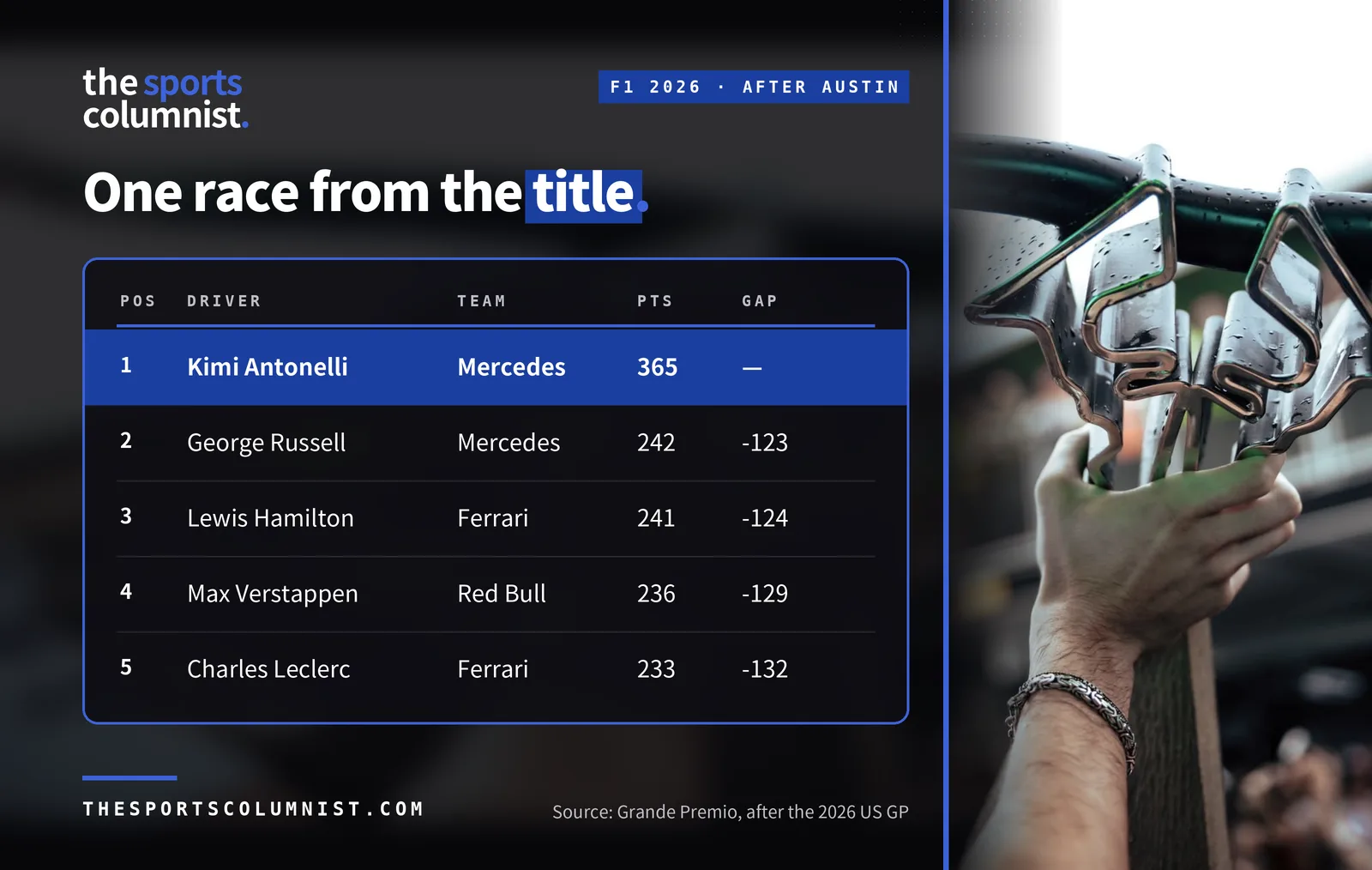
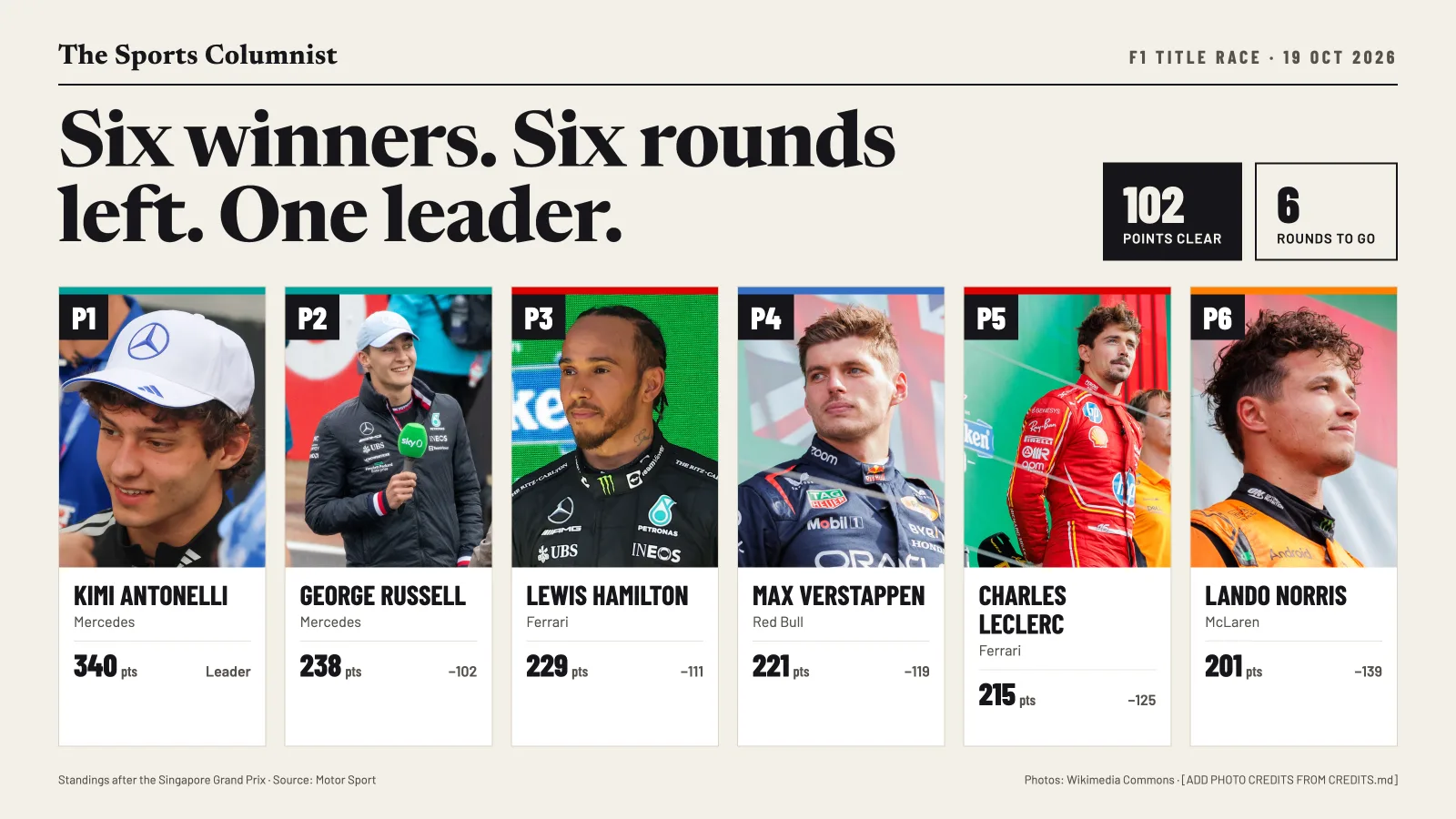
Antonelli now leads the championship by 123 points with four races and 125 points left. A ninth-place finish at the Mexico City Grand Prix on 1 November will settle it. "We are very close," he said after the race.
The bet: a teenager in Hamilton's seat
When Lewis Hamilton left for Ferrari, Mercedes had the most valuable seat in Formula 1 to fill. It did not sign an established star. It promoted an 18-year-old from Bologna who had joined its junior programme at 12.
The decision looked risky in 2025. Antonelli finished seventh in his rookie season with 150 points and three podiums, but no wins. One year later, the return is clear:
Records: youngest polesitter in F1 history, youngest championship leader and youngest Monaco winner.
Results: nine wins in 2026 and a 123-point lead over his own teammate.
Contract control: Mercedes signed him on short deals and has already extended him to the end of 2027, locking in his breakthrough years before he can command a superstar's salary.
That is the real business lesson. Mercedes spent years and money developing talent in-house, then trusted it with its biggest asset. Most teams in most sports prefer to buy proven names.
The second scoreboard: a champion built in-house
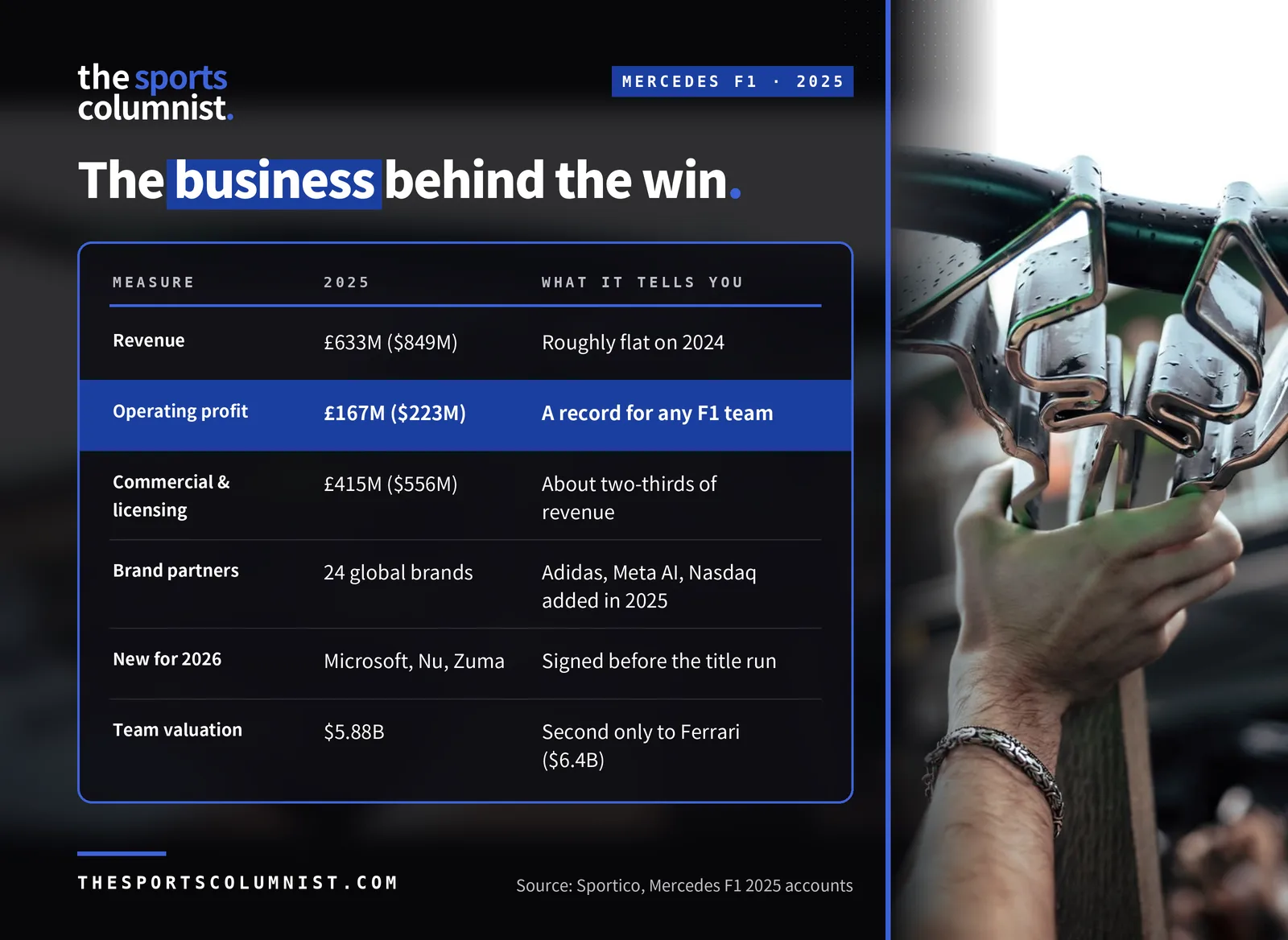
On track, Mercedes leads the constructors' standings by 133 points over Ferrari. Off it, the team was already the most profitable in Formula 1 before this season started.
The 2025 accounts show what Antonelli is now adding value to. Mercedes posted a record operating profit even while finishing second, and most of its money comes from commercial partners rather than prize money.
Three things make Antonelli's title run commercially important:
A new face for the brand. Hamilton was the most marketable driver of his era. Mercedes now has a 20-year-old champion-in-waiting who can front its partnerships for a decade.
Italy. Antonelli would be Italy's first world champion since Alberto Ascari in 1953, in a country where F1 support has long belonged to Ferrari. That opens a market Mercedes has never owned.
America. He won in Austin, at what the promoter calls the best-attended single weekend sporting event in the US. American brands such as Microsoft and Nasdaq are already on the car.
Global brands follow global audiences. It is the same logic behind the Netflix World Cup deal: whoever holds the attention holds the money.
The value of a winning driver is hard to measure in one season. But a team that turns its own academy graduate into a world champion gets a story no sponsor fee can buy.
comments.
0 commentsNo comments yet. Be the first to join the conversation.