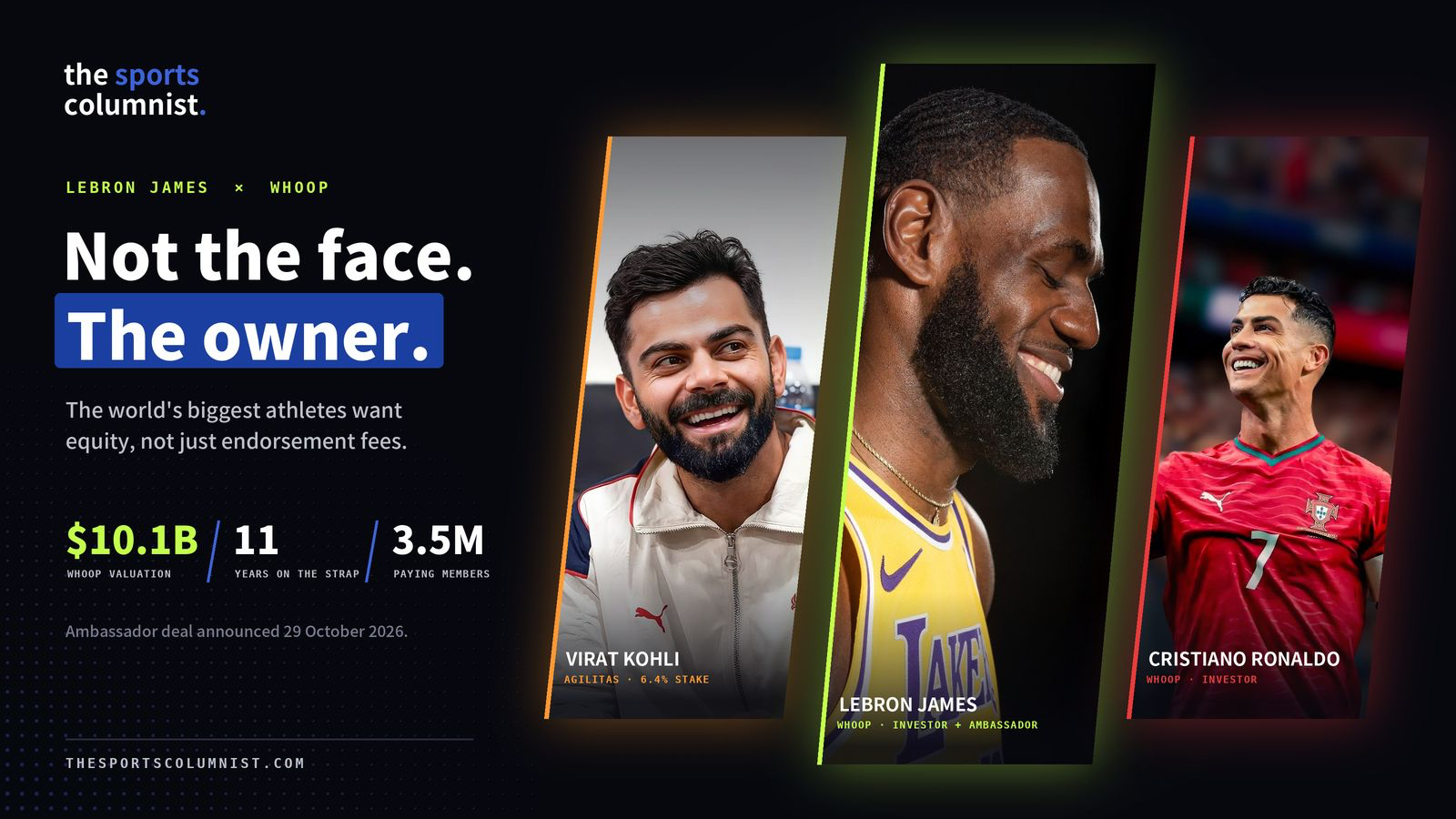
LeBron James has worn a Whoop strap for 11 years. Now he’s officially its global ambassador, and he’s also an investor in a company valued at $10 billion that’s eyeing a stock market listing. The LeBron James Whoop deal is the latest sign of a shift we’ve been tracking from India to the US: the world’s biggest athletes no longer just want to be paid to promote a brand. They want to own a piece of it.
What happened
On October 29, Whoop announced that LeBron James has joined as a global ambassador, formalizing a relationship that began more than a decade ago. One of the company’s earliest members and now an investor, James will partner with Whoop to champion the importance of sustained athletic excellence and everyday vitality.
He goes back a long way with the brand: James was among Whoop’s first 100 members in 2015 and will appear in global advertising campaigns. Founder Will Ahmed said the partnership would include a limited-edition fitness band designed with input from James, following a similar collaboration with football star Cristiano Ronaldo.
What we don’t know is the money. The company declined to disclose the size of his stake or the terms of the partnership.
The company behind the strap
Whoop is no longer a niche gadget. It raised $575 million at a $10.1 billion valuation earlier this year, reported a $1.1 billion year-end revenue run rate and said it was cash-flow positive in 2025. In total, Whoop has raised more than $900 million in venture capital and is moving toward an IPO, and it currently has 3.5 million active paying members.
Ahmed isn’t promising a date, though: “We’re building Whoop for the long-term, not toward a specific IPO date,” he said.
Why this deal is different
The athlete is a shareholder, not just a face. A traditional endorsement pays an athlete a fee for a fixed period. An equity stake rises in value as the company grows, and pays off most if it lists or is sold. With Whoop valued at $10.1 billion and eyeing an IPO, LeBron’s stake could be worth far more than any ad campaign fee.
Early belief pays. He’s not alone. Fellow NBA star Kevin Durant has invested in Whoop multiple times, starting in 2017, and Whoop was valued at $125 million during its Series C the following year. The company has grown roughly 80 times in value since then.
The marketing is more believable. LeBron has used the product for over a decade, and the company even shares his data: James’ sleep score ranks among the top 10% of Whoop users. In our view, that’s the strongest kind of endorsement, one built on genuine use and long-term ownership.
India is following the same playbook
We’ve seen the same shift at home this month:
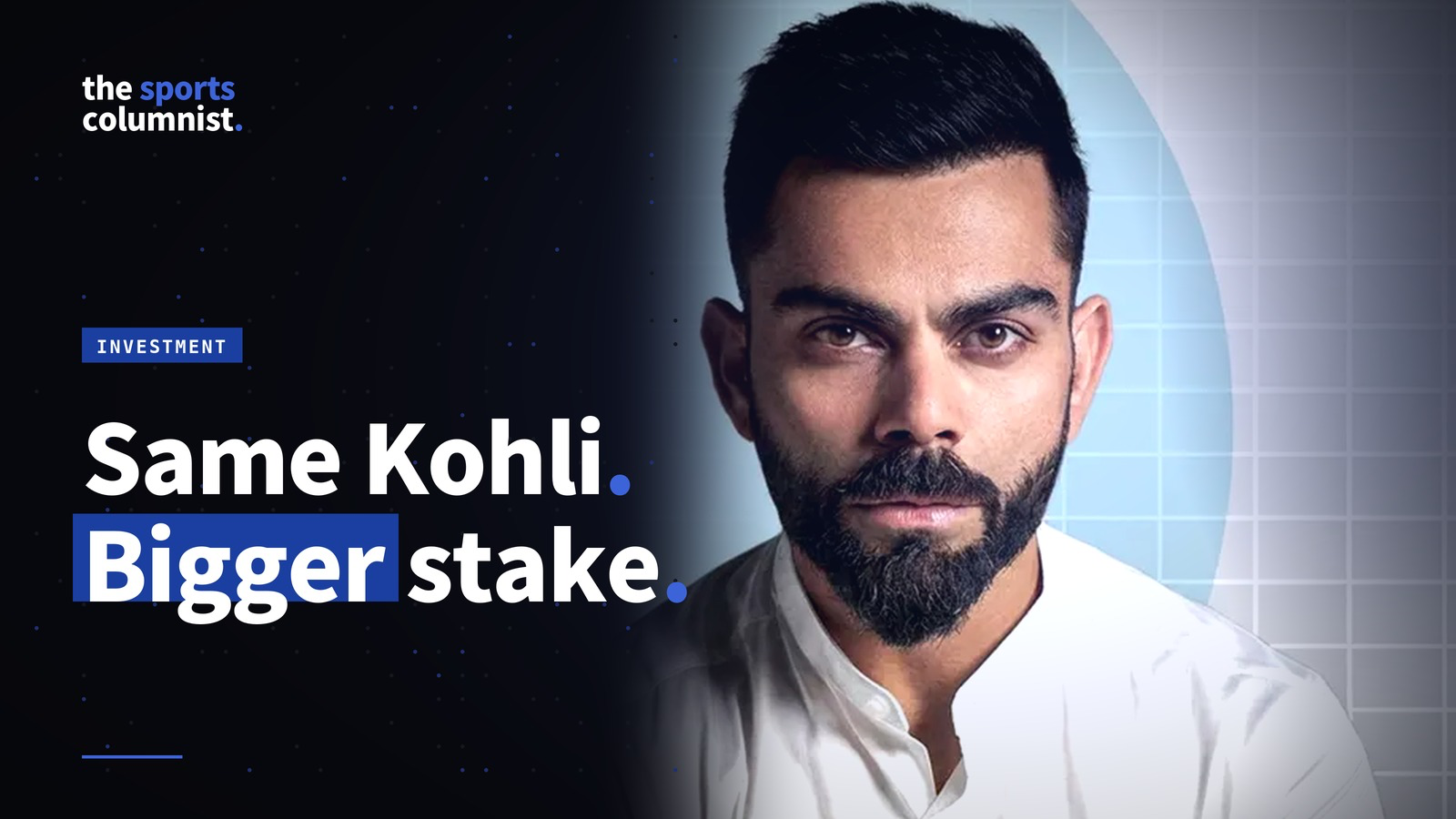
Virat Kohli saw his stake in Agilitas rise from 1.8% to 6.4% after his brand one8 merged into the company, without writing a new cheque.
KL Rahul and Sania Mirza are among the backers of Boldfit, which has just raised over ₹400 crore.
MS Dhoni has launched his own esports club, Mahi Clutchers.
The pattern is clear. India’s biggest stars are moving from one-off fees to long-term ownership, especially in brands they actually use.
What it means for brands and athletes
For startups: offering equity to the right athlete can be cheaper upfront than a big endorsement fee, and it buys long-term commitment, not just a campaign.
For athletes: equity carries risk (the company has to succeed) but offers far more upside, and a role in the business beyond the playing career.
For fans: endorsements from athlete-owners tend to feel more authentic, because the athlete has real skin in the game.
The question that matters
Will the next generation of Indian athletes ask for equity before they ask for a fee? LeBron’s Whoop deal shows what happens when an athlete backs a brand early and sticks with it. In Indian sport, the most valuable contract may soon be a cap table, not a cheque.
At The Sports Columnist, we cover the deals, the money and the decisions behind sport. Every game has a second scoreboard, and more athletes now want a share of it.
Sources: Whoop and company announcements, October 2026; company funding disclosures.
Read more from The Sports Columnist
→ Virat Kohli’s one8 has merged into Agilitas. Why his stake has more than tripled
→ Boldfit raised ₹400 crore. Can a homegrown brand win India’s fitness market?
→ MS Dhoni is entering esports. Why Captain Cool is betting on gaming
→ Get The Dugout, our free newsletter, every Monday
comments.
0 commentsNo comments yet. Be the first to join the conversation.