Michael Phelps leaves Octagon: why athletes now want equity, not just endorsements
Michael Phelps has left Octagon after more than 20 years for The Familie, an agency built around equity. Here is why athletes now want to own brands, not just endorse them.
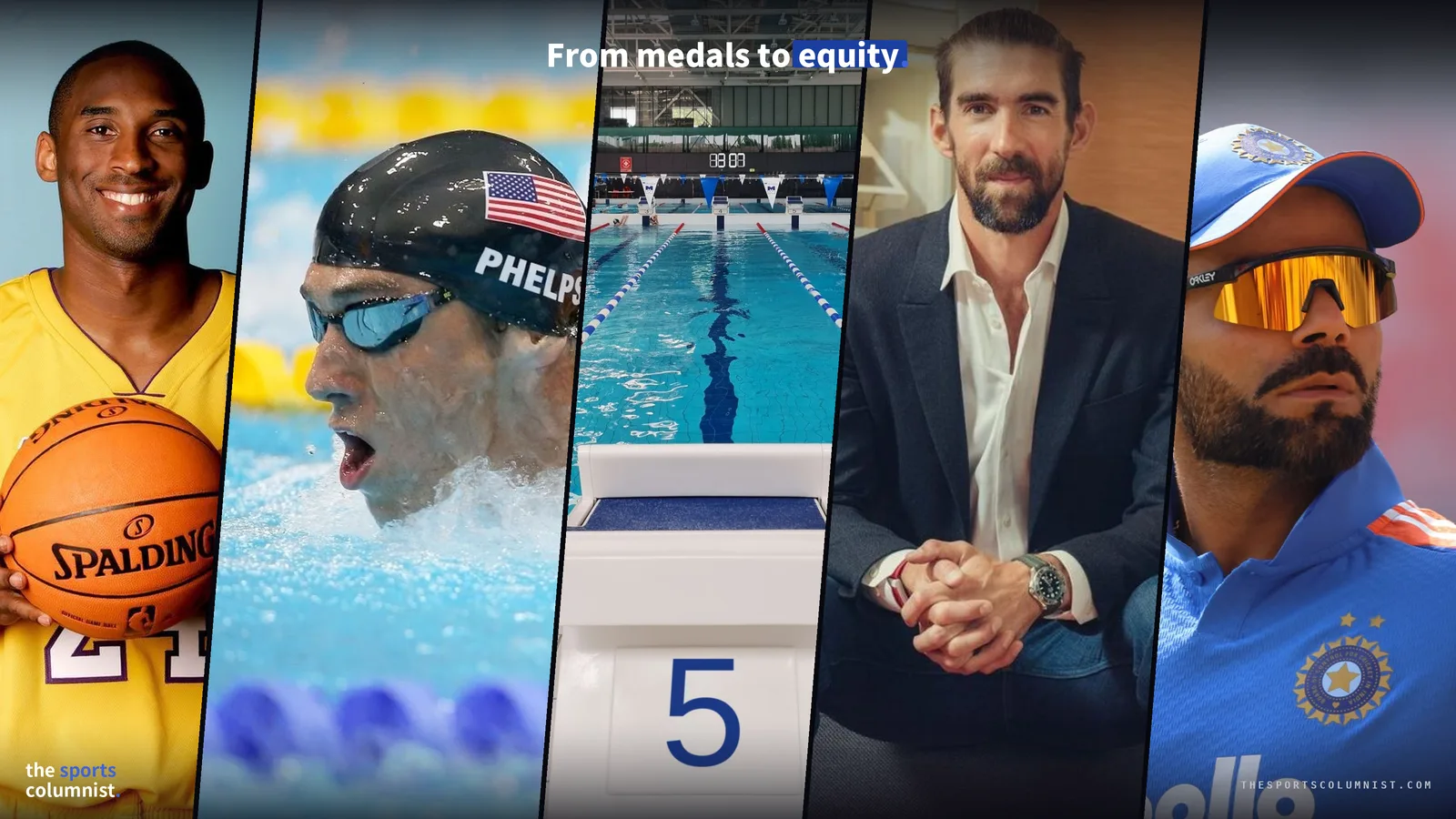
Michael Phelps has moved from Octagon to The Familie after more than 20 years. Photo: The Sports Columnist
Michael Phelps has left Octagon, the agency that represented him for more than 20 years, and signed with The Familie. The 28-time Olympic medallist, who retired from swimming in 2016, will work with the agency on brand partnerships, investments, media ventures, intellectual property and philanthropy. The terms have not been disclosed, and Phelps has not said publicly why he left.
On the surface, it is an agency switch. Underneath, it says something bigger about where athlete money is heading: from being the face of a brand to owning a piece of it.
Who is The Familie?
The Familie is a talent agency that sells itself as a business incubator, not just a deal-maker. Founder Steve Astephen relaunched it in 2019 with a "talent-equity" model at the centre of its pitch.
Started in 1998 as an agency for snowboarders, after IMG passed on representing them.
Sold in 2003 to Casey Wasserman's agency, then relaunched under The Familie name in 2019.
Services: strategic partnerships, brand management, legal support and licensing. A sister firm, Unlisted Brand Lab, builds new brands with talent.
Clients span the NFL, NBA, golf, action sports, music and media.
Growing in sport: the Phelps signing expands a sports division that is adding staff in golf, team sports and motorsports.
"Michael has earned the trust and admiration of millions around the world through excellence, authenticity, and purpose," Astephen said in the agency's announcement.
Two decades with Octagon: the endorsement era
Phelps built one of the biggest endorsement careers in Olympic history with Octagon. His long-time agent, Peter Carlisle, founded Carlisle Sports Management in 1997; Octagon bought it in 2001, and Carlisle went on to run Octagon's Olympic and action sports division.
By 2012, Phelps's sponsors included Subway, Under Armour, Visa, Procter & Gamble and Speedo, with many deals running through the 2016 Rio Olympics. Carlisle had long said Phelps could earn $100 million from endorsements in his lifetime, an idea that was once dismissed and later widely accepted.
That was the classic model: win medals, sign sponsors, get paid in cash. In a July 2026 podcast with SoFi, Phelps described what he now values in an agent: "Just having an agent that is able to structure deals in different ways, thinking long term".
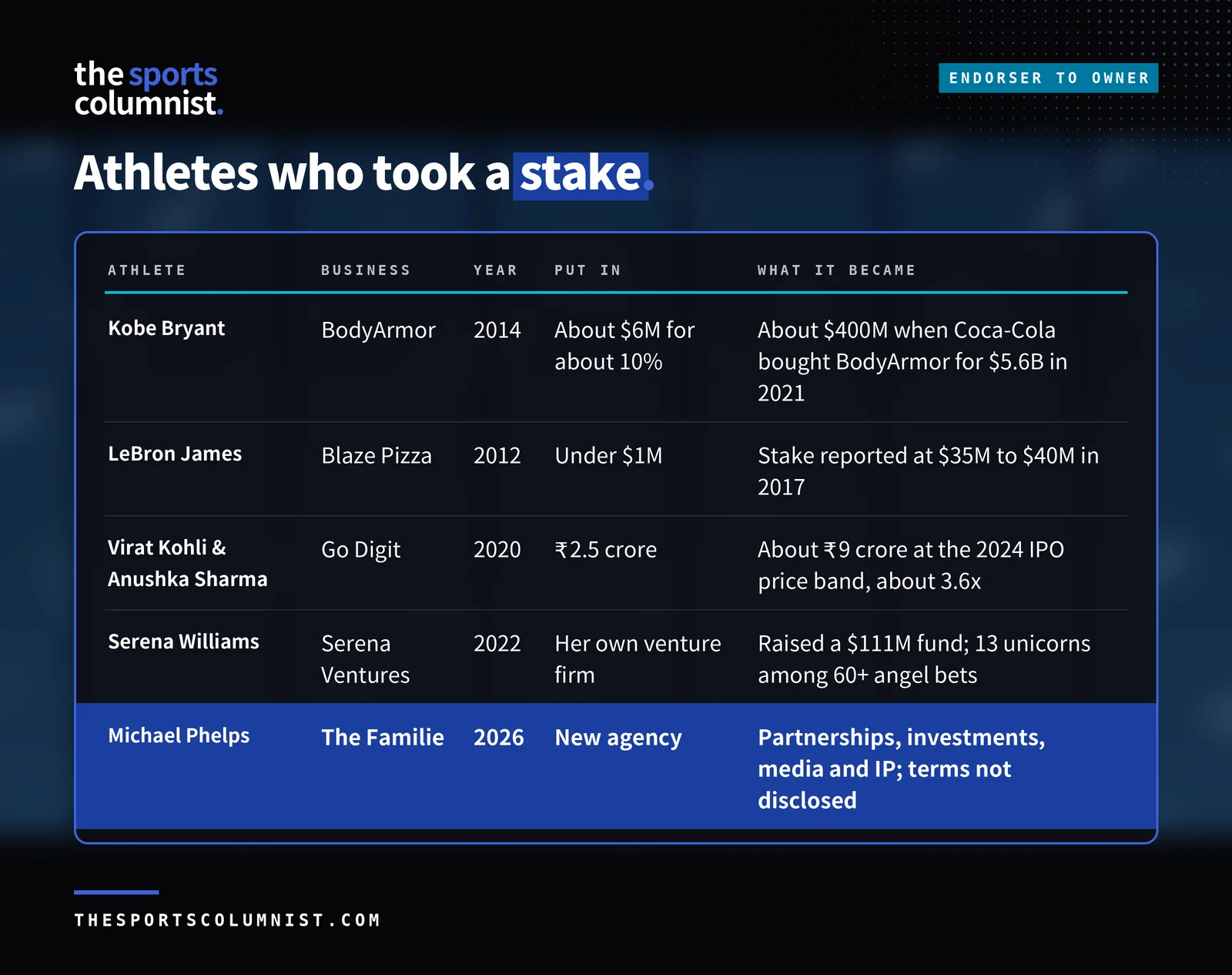
From endorser to owner: athletes who took a stake
Phelps is following a path other stars have already proven. The biggest wins came from athletes who took equity early, before the brand was big.
Brands are now offering equity too. Gymshark gave bodybuilder Chris Bumstead a stake in 2024.
The second scoreboard: why equity beats a cheque
More deals, smaller cheques. Global sports sponsorship reached $42 billion in 2025, up 41% from $29.7 billion in 2020, according to GlobalData figures cited, But deal volume grew faster, up 53%, so the average deal shrank from about $1.09 million to about $1.01 million. The money is being spread across more athletes.
Ownership keeps paying after the medals stop. An endorsement fee is paid while an athlete is in the spotlight. A stake can keep growing for years after retirement, as Kobe Bryant's BodyArmor exit showed. Phelps retired a decade ago, so long-term upside matters more to him than a one-season fee.
Agencies are changing what they sell. Traditional agencies sell an athlete's time and image to brands. Newer ones, like The Familie, pitch themselves as incubators that help talent build or buy into businesses. The skill that matters now is structuring deals: cash, equity, or a mix.
India is catching up. Virat Kohli's Go Digit bet shows Indian athletes can win big through startup equity and IPOs. As India's D2C, fitness and sports-tech brands grow, more athletes are likely to ask for a stake instead of only a fee. It is the same shift that put many of the highest-paid athletes of all time on the list through business income, not just salaries.
The risk is real. Cash is guaranteed; equity can go to zero. That is why many deals now mix the two: a smaller fee plus a stake.
The takeaway
Michael Phelps does not need another sponsor. He wants an agency that can turn his name into ownership: investments, media and businesses that grow long after his last race. His move from Octagon to The Familie is one athlete's choice, but it reflects a wider shift in how the biggest stars get paid.
At The Sports Columnist, we cover the money, deals and decisions behind sport. Every game has a second scoreboard, and the smartest athletes are now playing to own a share of it.
Data note: figures are as reported by the linked sources at the time of publication. Stake values are estimates, and the terms of Phelps's deal with The Familie have not been disclosed.
If you were a brand, would you rather pay a star in cash or give them a stake?
comments.
0 commentsNo comments yet. Be the first to join the conversation.