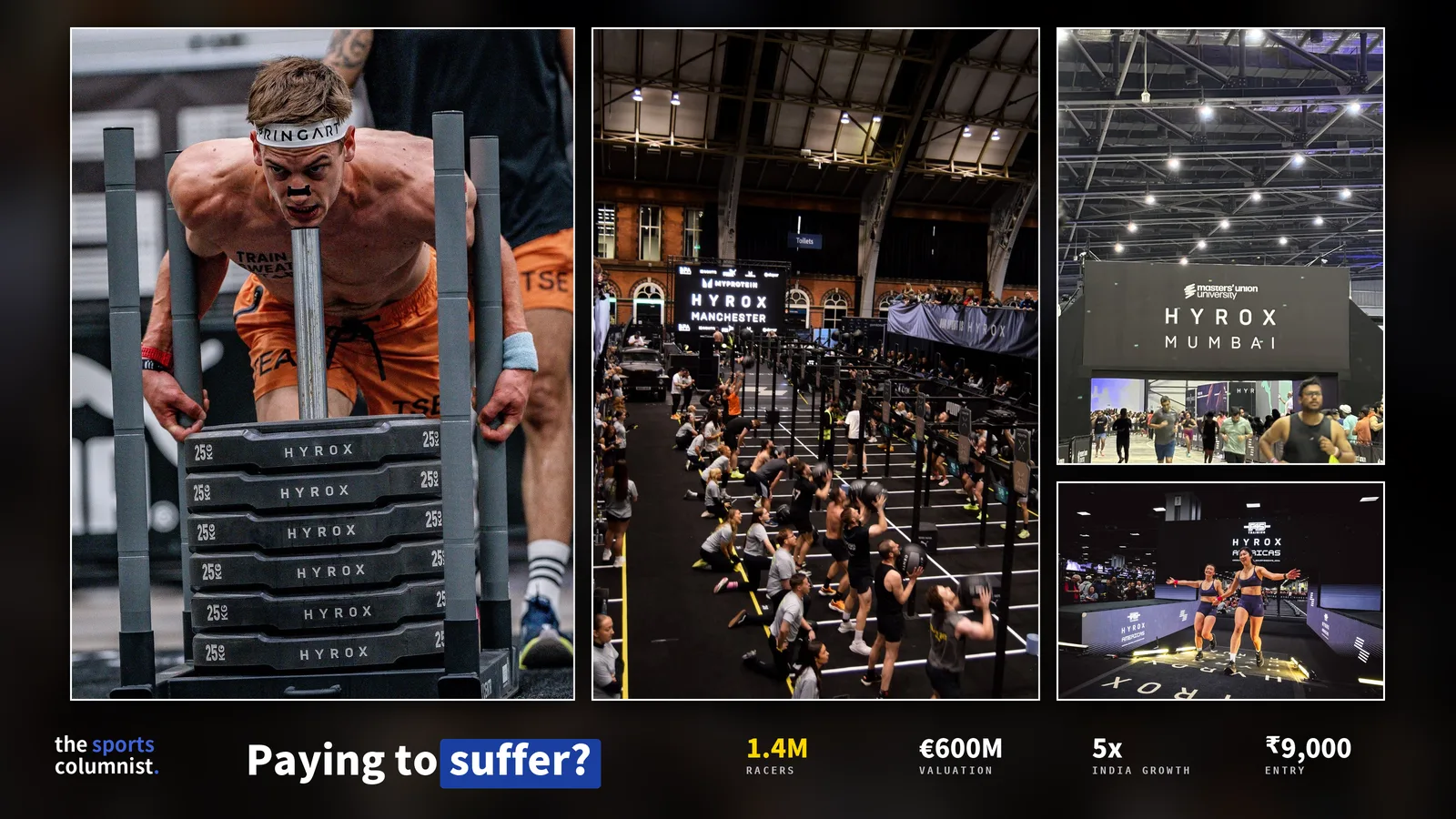
Hyrox is now valued at about €600 million after an L Catterton-led deal. Photo: The Sports Columnist
Most sport asks you to buy a ticket and watch. The Hyrox fitness race asks you to pay ₹9,000 and suffer. Eight kilometres of running, eight brutal gym stations, a stopwatch and a crowd cheering you on. And people are queuing up to do it.
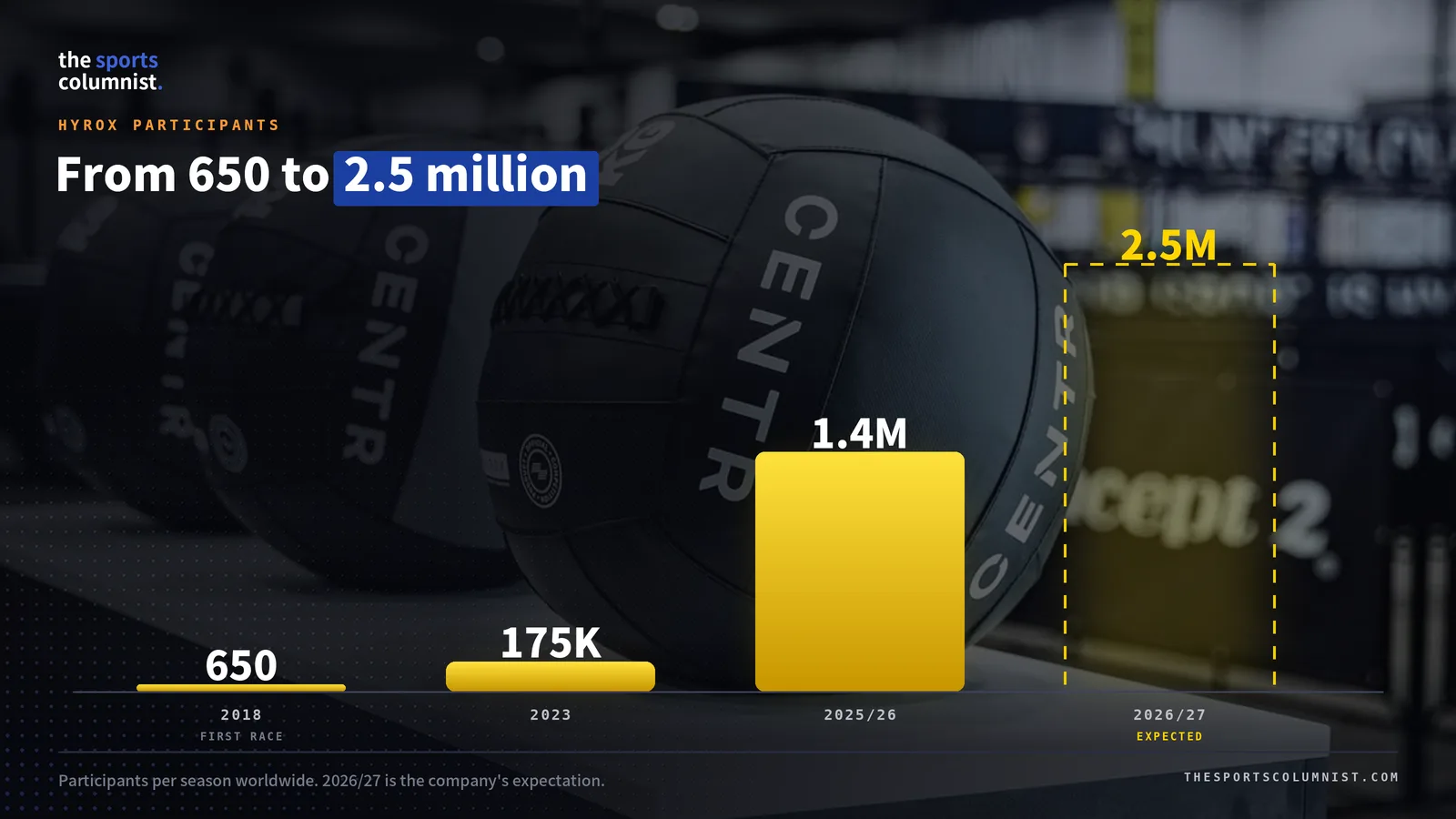
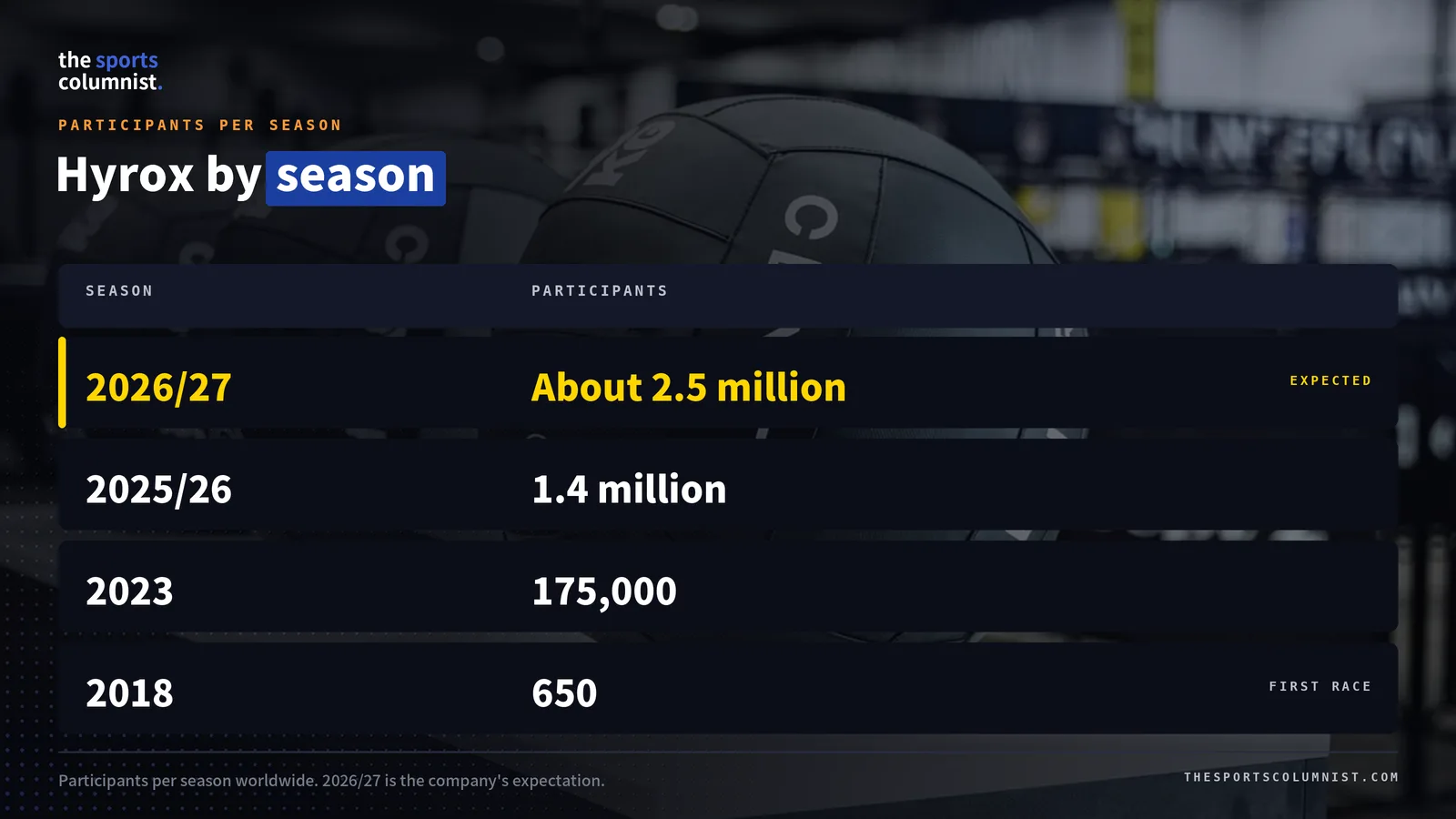
In 2018, Hyrox's first race in Hamburg had 650 people. Last season, 1.4 million took part. In September, a consortium led by L Catterton, the private equity firm backed by LVMH, bought a majority stake in a deal reported to value Hyrox at about €600 million. The gym workout has become a global sports business.
What Hyrox is
Hyrox calls itself "the world series of fitness racing". The format is the same in every city, so a time in Mumbai can be compared with one in London or New York.
Every race is eight 1 km runs, each followed by one workout station, in this order:
SkiErg, 1,000 m
Sled push, 50 m
Sled pull, 50 m
Burpee broad jumps, 80 m
Rowing, 1,000 m
Farmer's carry, 200 m
Sandbag lunges, 100 m
Wall balls, 100 reps
That's the trick. Anyone who goes to a gym already knows these exercises. You don't need a team, a pitch or years of skill. You need a training plan, and an entry fee.
It was founded in Hamburg in 2017 by Christian Toetzke and Moritz Fürste, a three-time Olympic medallist in field hockey. Races now run in more than 35 countries.
The numbers: from 650 to 2.5 million
Hyrox's growth is the kind of curve most sports would dream of. From 650 racers at its first event in 2018, it reached 175,000 competitors across 65 races in 2023. In the 2025/26 season, it held more than 100 events with 1.4 million participants and 1.5 million spectators.
This season, the company expects about 2.5 million participants across roughly 135 events.
The deal: founders back in control, with LVMH-linked money
On 8 September, a consortium led by L Catterton bought the majority stake in Hyrox from Infront Sports & Media, which had owned it since 2022, swissinfo reported. The founders and WndrCo, the investment firm of former DreamWorks boss Jeffrey Katzenberg, are part of the group.
The price wasn't disclosed, but Bloomberg sources put the valuation at about €600 million ($698 million). For context, L Catterton was formed from a merger with LVMH's investment arm, and Bernard Arnault's group is still a lead shareholder. A luxury-backed investor buying a sweaty gym race tells you how fitness is now seen: as a lifestyle brand.
The next two goals are big ones:
TV. "I'm pretty sure we will see Hyrox races on TVs everywhere in the world over the next 18 months," Fürste told SportsPro. In Germany, Bild will show the rest of the 2026/27 Elite Series.
The Olympics. Hyrox has partnered with World Triathlon, which will recognise "hybrid racing" as a discipline. Brisbane 2032 is the earliest Games it could join.
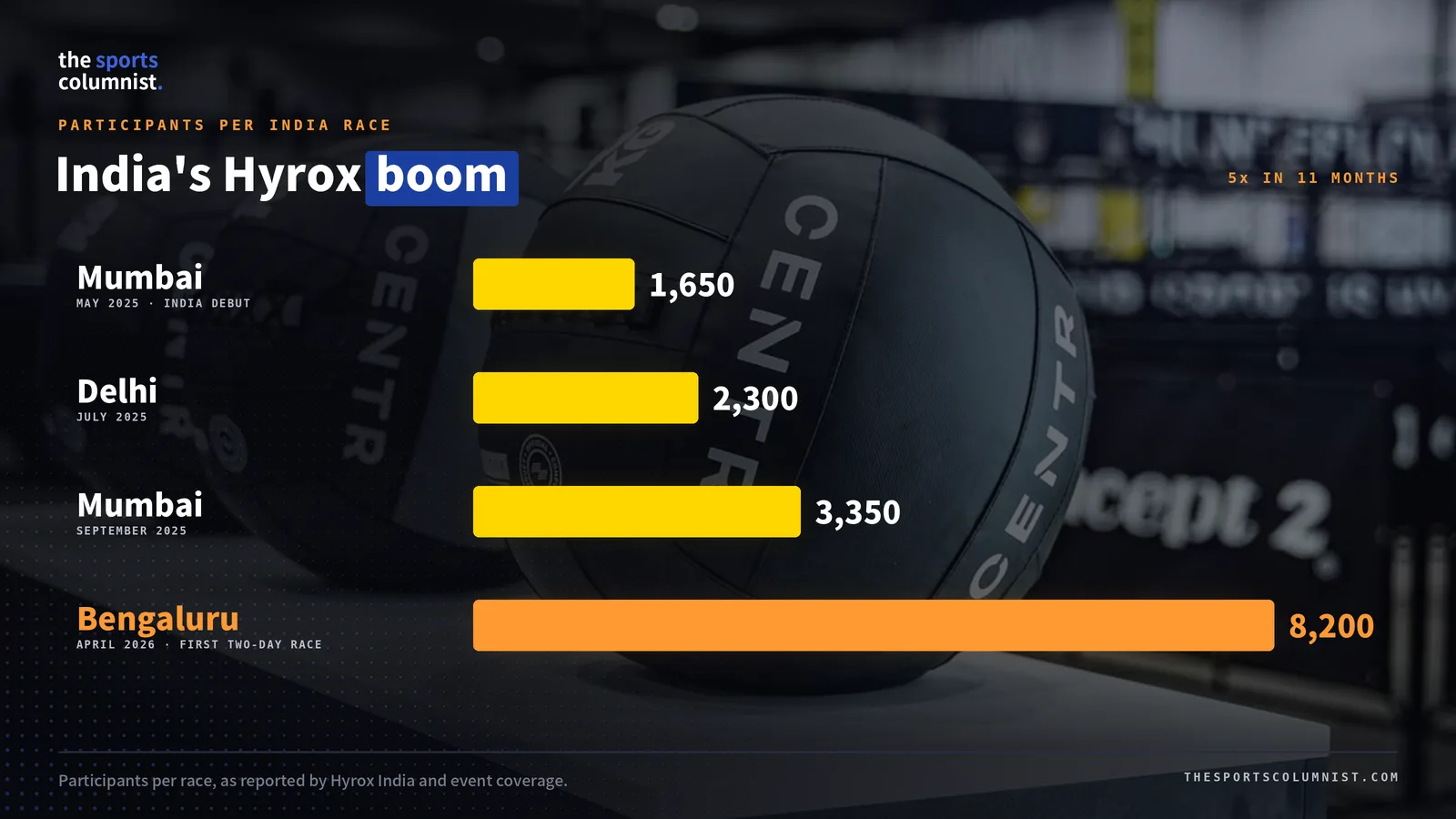
Hyrox in India: five times bigger in 11 months
India is one of Hyrox's fastest-growing markets. It's run here by HYROX India, a partnership between Hyrox World and Yoska.
Mumbai, May 2025: the debut, with 1,650 participants
Delhi, July 2025: 2,300
Mumbai, September 2025: 3,350, with every category sold out
Bengaluru, April 2026: the first two-day race in India, with more than 8,200 athletes and 12,000 spectators at BIEC, The Bridge reported
The Delhi edition then grew from one day to three in July, with organisers expecting more than 10,000 people, according to ThePrint. Roughly a third of Indian participants are women, and racers range from 16 to over 70.
It fits a pattern we wrote about in Bengaluru's turf generation: Indian city workers want sport that's social, organised and fits around a busy job. Hyrox gives them a race day to train for.
The second scoreboard: a sport where the players pay
Most sports businesses make their money from broadcasters and sponsors. Hyrox flips it. About 60% of its revenue comes from participation fees and spectator tickets, and media rights are a "super small" share, Fürste told SportsPro.
In India, a singles entry for Mumbai this September cost ₹8,000 to ₹9,000, doubles ₹6,392 to ₹8,000 per person, and a spectator pass ₹395 to ₹700. At Bengaluru, 8,200 athletes paying an average of about ₹7,000 is roughly ₹6 crore in entry fees from one weekend, before tickets and sponsors.
The rest of the model is built around the racer:
Sponsors who want gym-goers: Ultrahuman is India's title partner, Puma the global kit partner, plus brands from Red Bull to Myprotein.
Gyms as a sales channel: gyms become official Hyrox training clubs and sell classes for the race.
A season, not a one-off: results count towards rankings and a world championship, so people come back.
The risk is the same as any fitness craze. If the format stops feeling new, people stop paying. TV is Hyrox's bet that it can become a sport people watch, not just one they do.
The takeaway
Hyrox has found something most sports never manage: millions of people who pay to play, not just to watch. Now it wants the screens and the Olympic rings too. If it gets them, the gym workout could become one of the most valuable new sports of the decade.
At The Sports Columnist, we cover the money, deals and decisions behind sport. Every game has a second scoreboard, and in Hyrox, the competitors are paying for it.
Data note: participant figures are company figures reported by Traxrace, SportsPro, The Bridge and ThePrint. The €600 million valuation is reported, not confirmed. The ₹6 crore estimate is our own calculation from reported averages. Figures as of 9 November 2026.
Would you pay ₹9,000 to race Hyrox? Or have you already done one? Tell us in the comments.


comments.
0 commentsNo comments yet. Be the first to join the conversation.