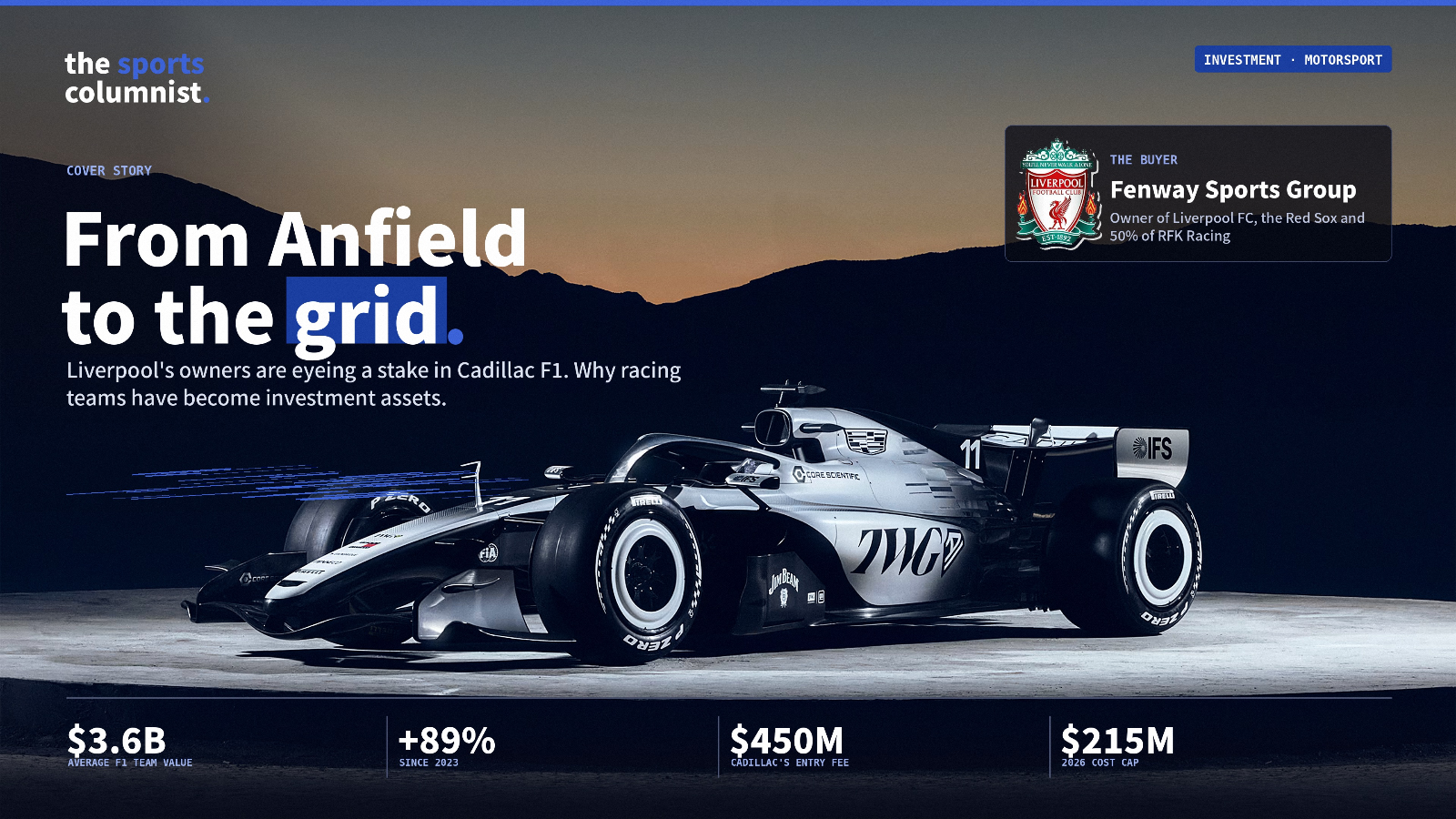
Not long ago, Formula 1 teams were money pits that changed hands for symbolic sums. Today, the owners of Liverpool, the Boston Red Sox and the Pittsburgh Penguins want one. Fenway Sports Group’s reported interest in Cadillac F1 is the latest sign of a big shift: racing teams have become some of the most sought-after assets in sport.
What’s happening
According to multiple reports, FSG is in talks to purchase a majority stake in the Cadillac F1 team, one of 11 franchises on the lucrative global Formula One circuit. The Guardian has put a price on it: FSG has held discussions over acquiring a majority stake in Cadillac’s Formula 1 team in a deal potentially worth more than £2 billion.
Nothing is agreed yet. FSG declined to comment on its investment plans. TWG has denied that a sale of the team is imminent, and Sportico reported earlier this week that Walter is shopping his stake at a valuation of at least $3 billion. And FSG has competition: there is said to be stiff competition for the Cadillac stake with up to six other parties expressing interest.
Why Cadillac is available
Cadillac is F1’s newest team. Cadillac F1, co-owned by General Motors, is the newest team in Formula One, which it joined this year. Its controlling owner is under pressure: the team is owned by Mark Walter’s TWG Global company, which is facing allegations of insurance fraud and is under federal investigation. Walter has been selling off parts of his sports empire this year, including the NBA’s Los Angeles Lakers and English Premier League soccer club Chelsea FC.
For FSG, the timing works too. It is exploring further sporting investments after selling a 38 per cent stake in Liverpool, which valued the club at £5.5 billion. And it already knows motorsport: the group holds a 50% stake in the RFK Racing NASCAR team.
Why racing teams have become investment assets
1. The cost cap turned losses into profits. Teams used to spend whatever it took to win, and most lost money. A spending limit introduced in 2021 changed that. For 2026, the operational cost cap for 2026 is set at $215 million. In our view, this is the single biggest reason investors now take F1 seriously: costs are capped, while revenue keeps growing.
2. The sport is growing fast. Formula One has experienced solid growth over the last decade and is reported to have generated more than $3.8 billion in revenues last year. Much of that growth has come from the US, driven by new races and a new generation of fans. The Boston Globe
3. Valuations have soared. The average team valuation has revved up to USD $3.6 billion, up 89 per cent since 2023, according to Forbes. Even teams that rarely win are worth more than ever: 10 F1 teams are each valued at USD $1.5 billion or more – a threshold only four teams had cleared two years ago.
4. There are only 11 seats at the table. Unlike most leagues, F1 almost never adds teams, and new entrants pay to join. When Cadillac entered, the figure Cadillac paid came in at $450 million, split ten ways for $45 million each among the existing teams. As one former Goldman Sachs sports banker put it: “There are 11 Formula One teams, and the potential for 12, and that’s it. The scarcity value is going to drive a lot going forward.”
5. It still looks cheap next to US sports. Forbes estimated that the average Formula One team was worth US$3.6 billion, while Sportico came in slightly lower at US$3.42 billion on average. This is still far below the average valuations for the NFL (US$7.1 billion) and the NBA (US$5.4 billion). For investors, that gap looks like room to grow.
Why this suits a group like FSG
FSG’s model is to own premium sports properties and build them commercially. Liverpool, the Red Sox and RFK Racing all benefit from the same skills: sponsorship, media, global fan growth and stadium and event revenue. An F1 team is a natural next step. As one report noted, an investment by FSG could provide Cadillac with additional commercial resources and experience in managing major international sports properties.
There’s also a strategic angle. In our view, owning a football club, a baseball team, an ice hockey team, a NASCAR team and an F1 team would give FSG sponsors and fans across almost every major market in the world, with a year-round calendar of events.
The risks
The price gap. Walter is reportedly asking for a valuation of at least $3 billion, but one independent estimate values Cadillac at $1.6bn in August 2026, the lowest on the grid. That’s a big gap for a team that hasn’t proven itself yet. f1-fansitef1salaries
Performance. Cadillac currently sit at the bottom of the standings as they build their operation. A buyer would need patience, and more investment, before results arrive. tribuna
Uncertainty. With TWG denying an imminent sale, several bidders in the running and questions over the 2027 driver line-up, nothing is certain yet.
The question that matters
Are F1 teams still undervalued, or have investors already priced in the sport’s growth? Cadillac’s price will be the clearest test yet. If a group like FSG pays $3 billion for F1’s newest and least successful team, it will confirm that in modern motorsport, the most valuable thing isn’t a car or a championship. It’s a place on the grid.
At The Sports Columnist, we cover the deals, the money and the decisions behind sport. Every game has a second scoreboard, and in Formula 1, it’s moving faster than the cars.
Sources: reporting by The Guardian, The Wall Street Journal and Sportico, as cited, November 2026;
Read more from The Sports Columnist
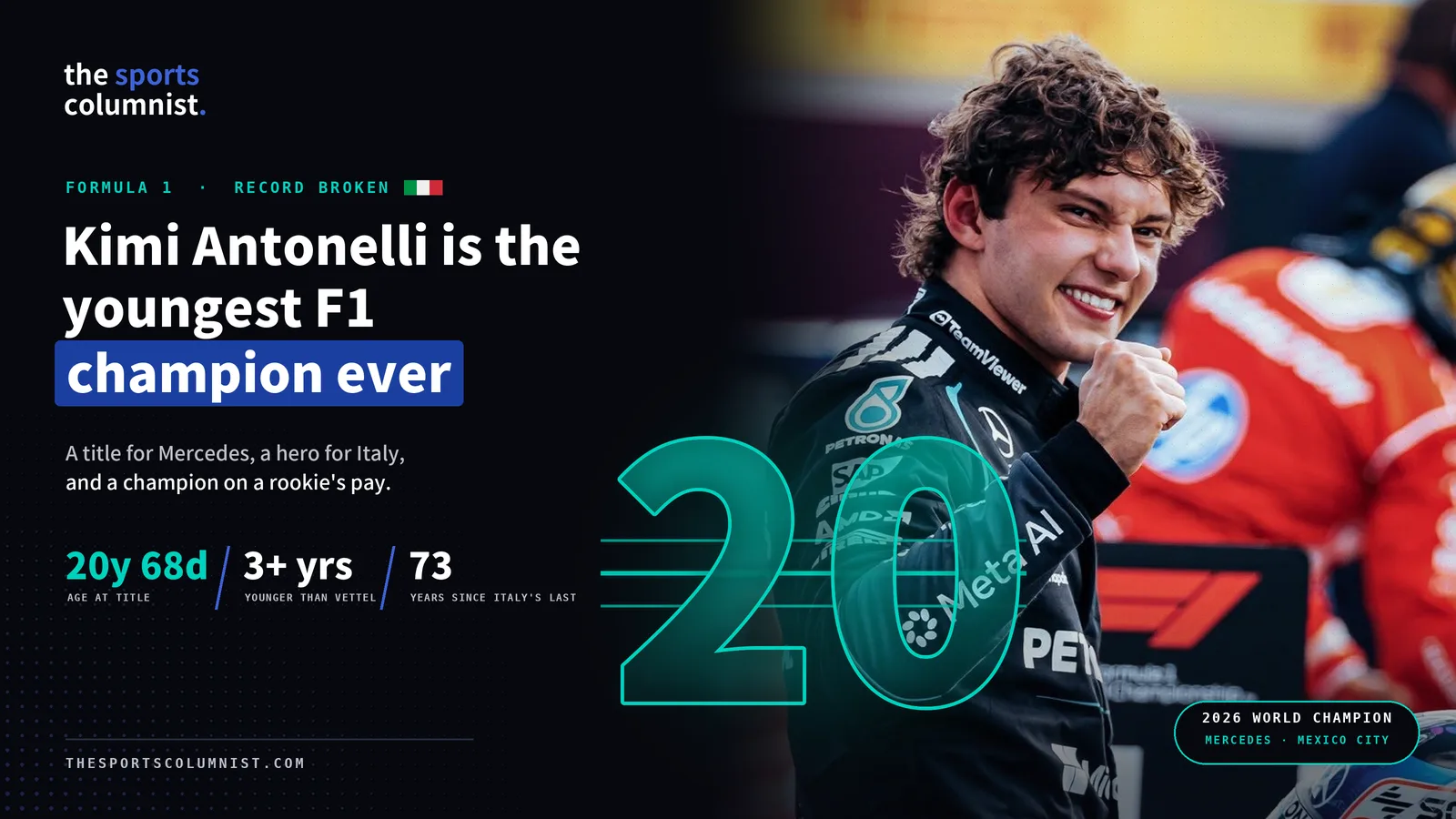
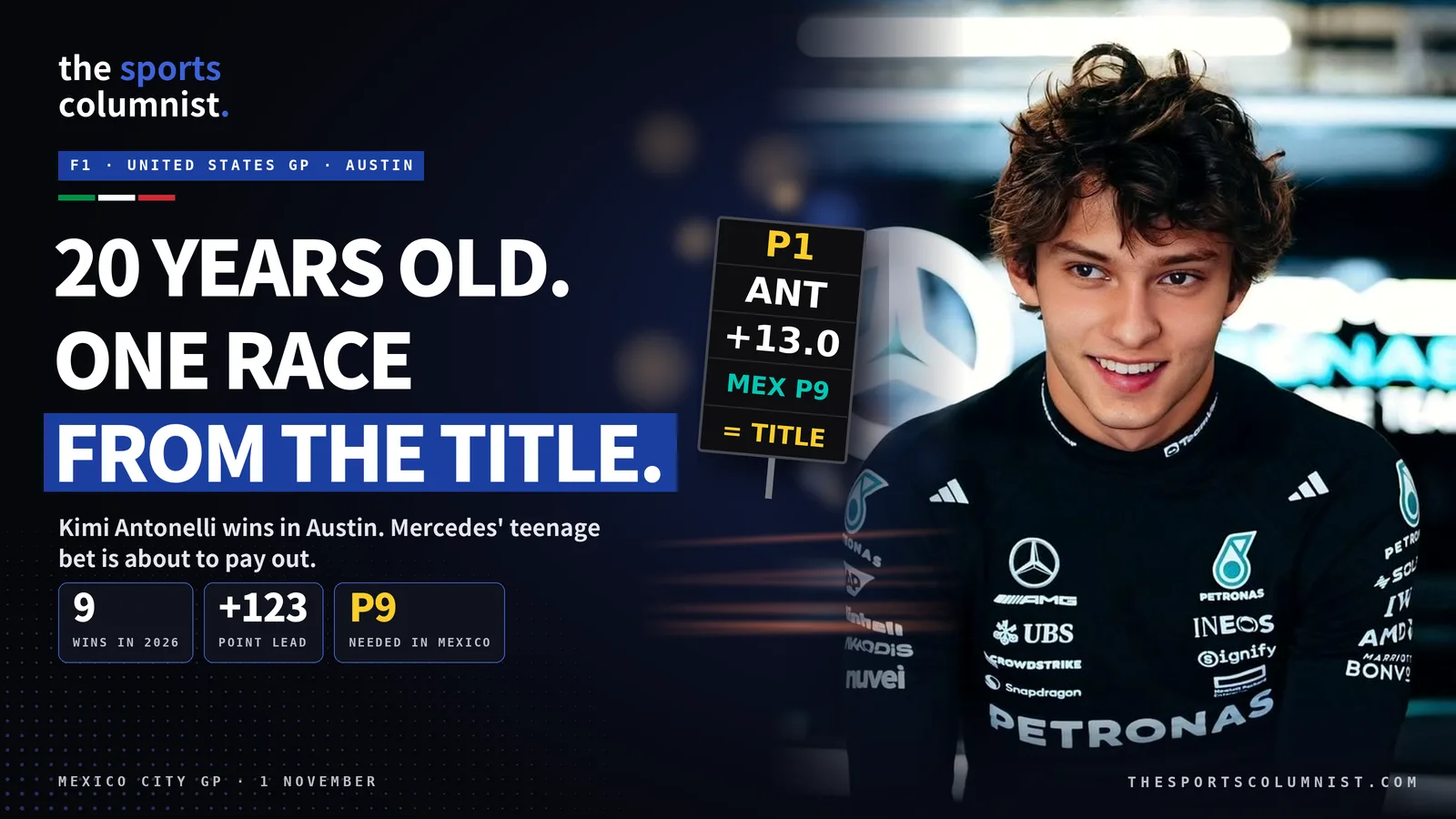
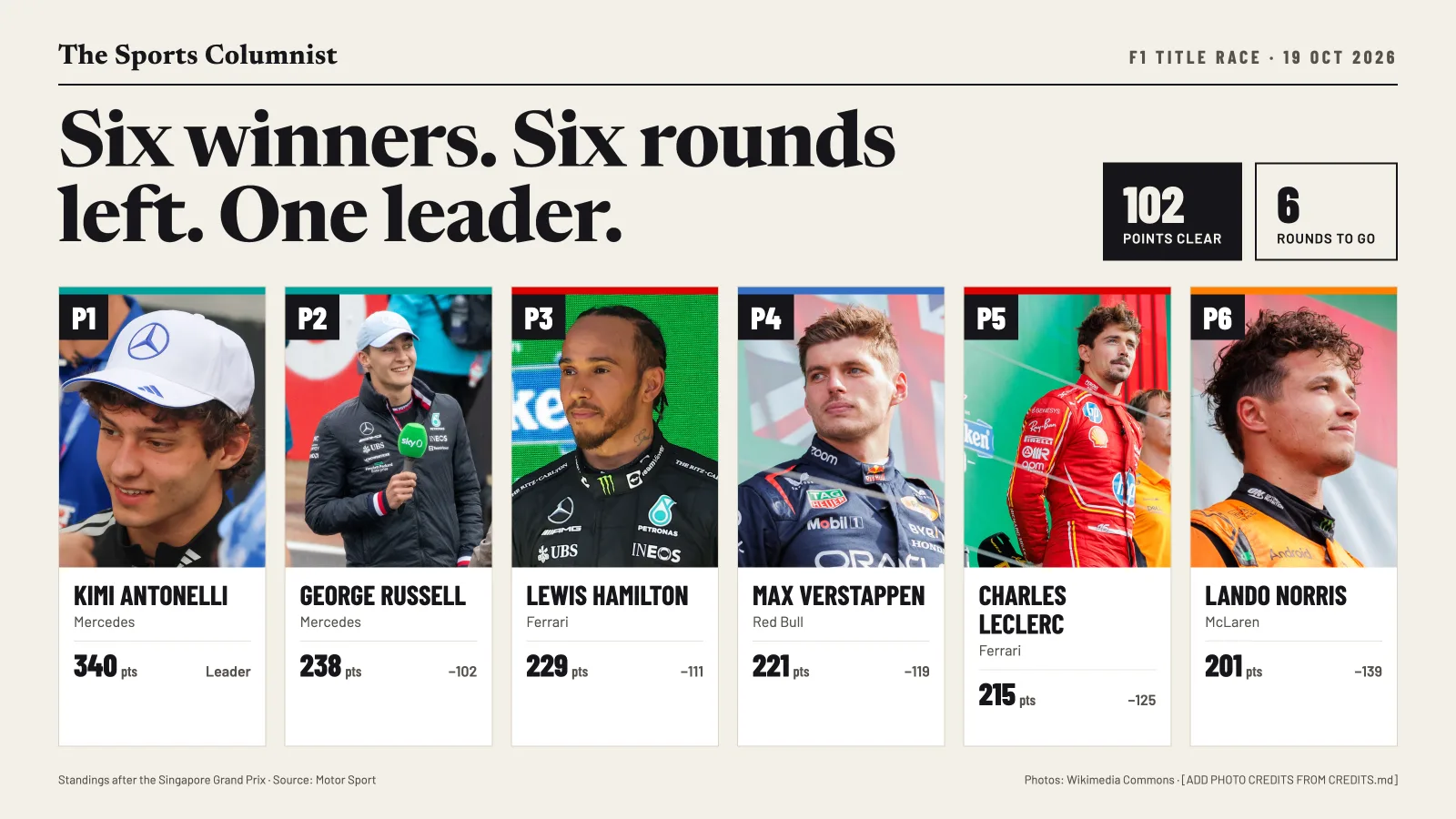
→ Kimi Antonelli’s US Grand Prix win and what it means for Mercedes
→ Cricket Australia is selling the Melbourne Renegades. Is the Big Bash the next IPL-style investment?
→ NBA Europe: the cities, the teams and the billion-dollar bids
→ Get The Dugout, our free newsletter, every Monday

comments.
0 commentsNo comments yet. Be the first to join the conversation.