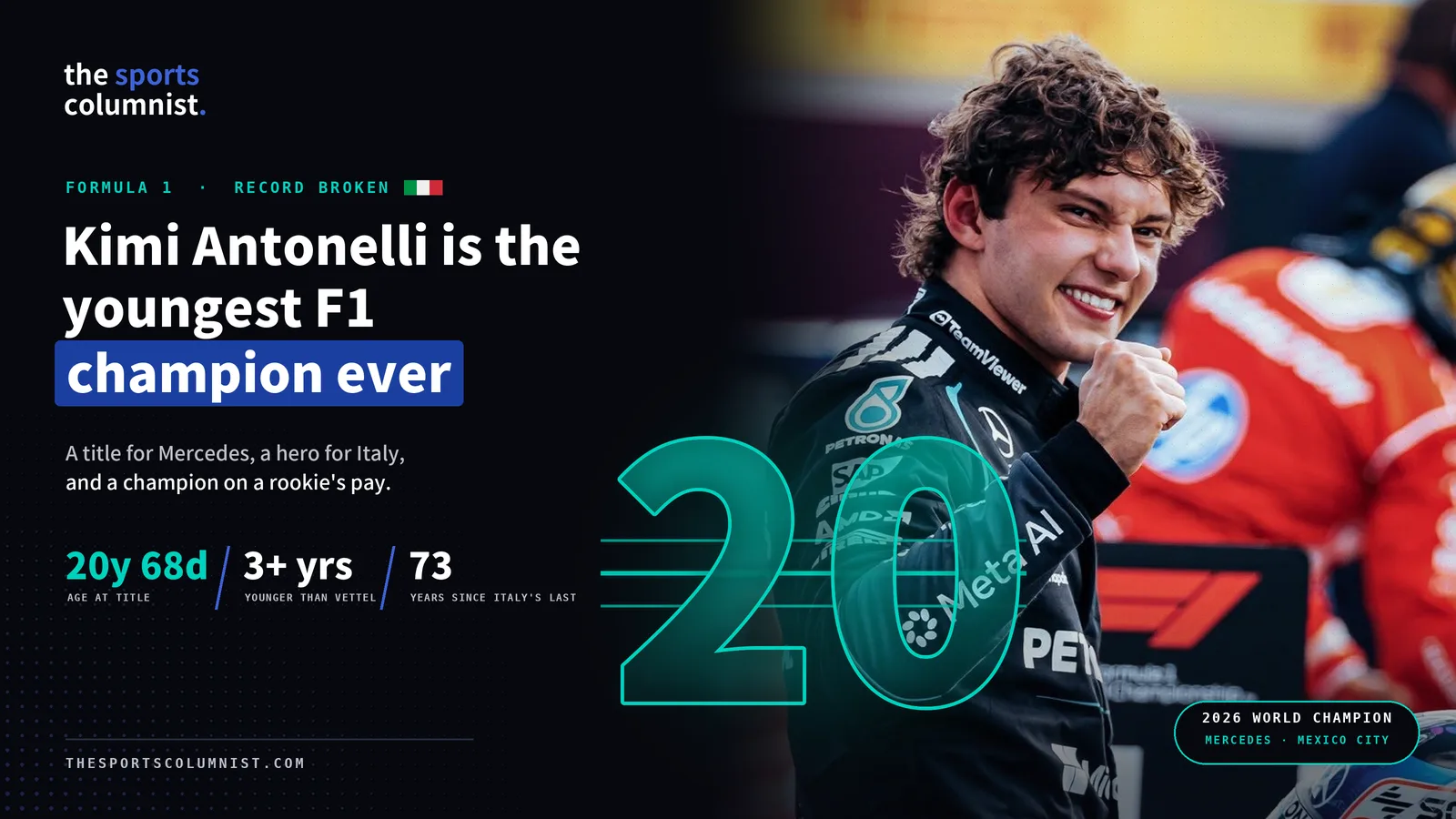
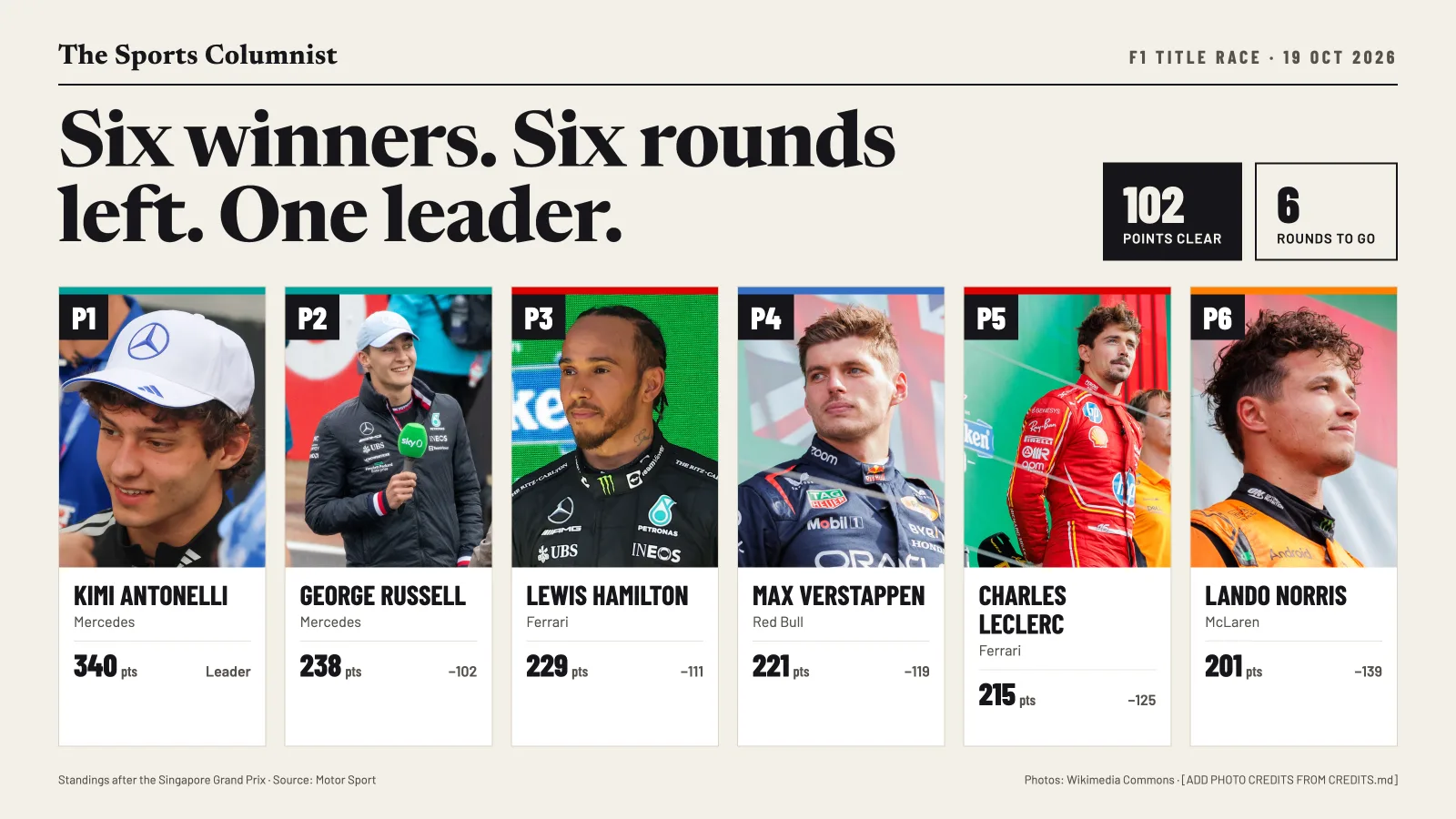
Kimi Antonelli is the youngest F1 champion in history. On 1 November, he finished third at the Mexico City Grand Prix and won the 2026 drivers' title for Mercedes with four races still to go. He is 20 years and 68 days old.
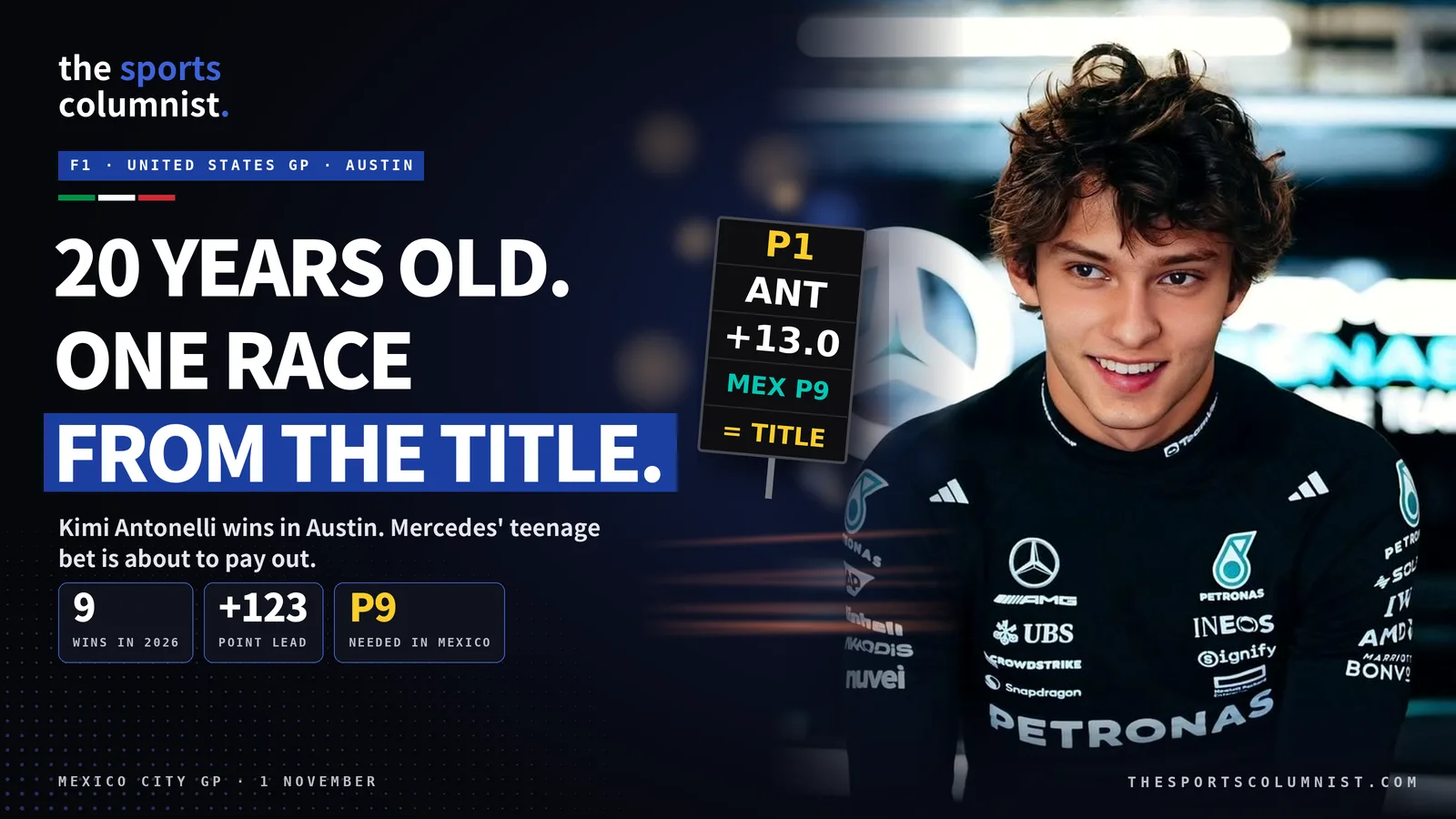
Max Verstappen won the race, with Lewis Hamilton second for Ferrari. Antonelli only needed ninth. After a mid-race red flag, he passed Charles Leclerc on the restart and took third anyway (Latin Times).
The record books are the headline. The business story underneath is bigger: a team that bet on a teenager, a champion paid a fraction of his rivals, and a country that has waited 73 years for this.
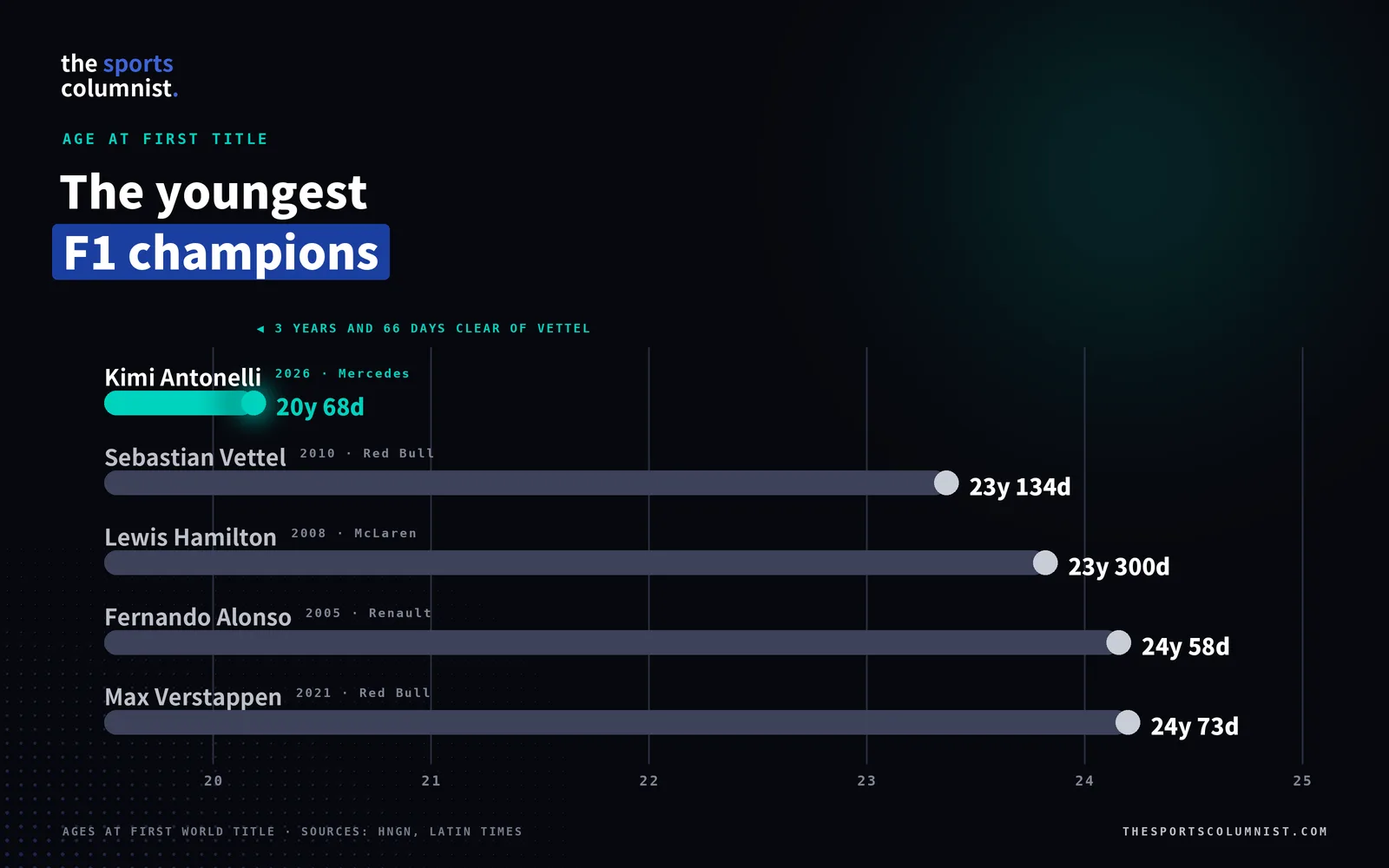
A record smashed by three years
Sebastian Vettel had held the record since 2010, when he won his first title at 23 years and 134 days. Antonelli has beaten it by more than three years (HNGN).
The season was full of firsts. Antonelli became the youngest polesitter in China and the youngest championship leader after Japan. At 19, he won Monaco from pole, set the fastest lap and led every lap, the first grand slam there since Mika Häkkinen in 1998. A week before Mexico, he took his US Grand Prix win in Austin, and was too young to legally drink the champagne in the US.
Mercedes' bet on a teenager
In August 2024, Mercedes had to replace Lewis Hamilton, the most successful driver in its history, who was leaving for Ferrari. It picked an 18-year-old who had never started a Formula 1 race (Formula 1).
Antonelli had won the Italian and ADAC F4 titles in 2022 and the Formula Regional European Championship in 2023. He then skipped Formula 3 and went straight to Formula 2. Toto Wolff said he had "the talent and speed needed to compete at the very top of our sport."
Two seasons later, that bet has paid off. Promoting from your own academy is cheaper than buying a proven star, and if the youngster works out, you own the next decade. Mercedes now has the champion, and he is one of the cheapest drivers on the grid.
The champion on a rookie's pay
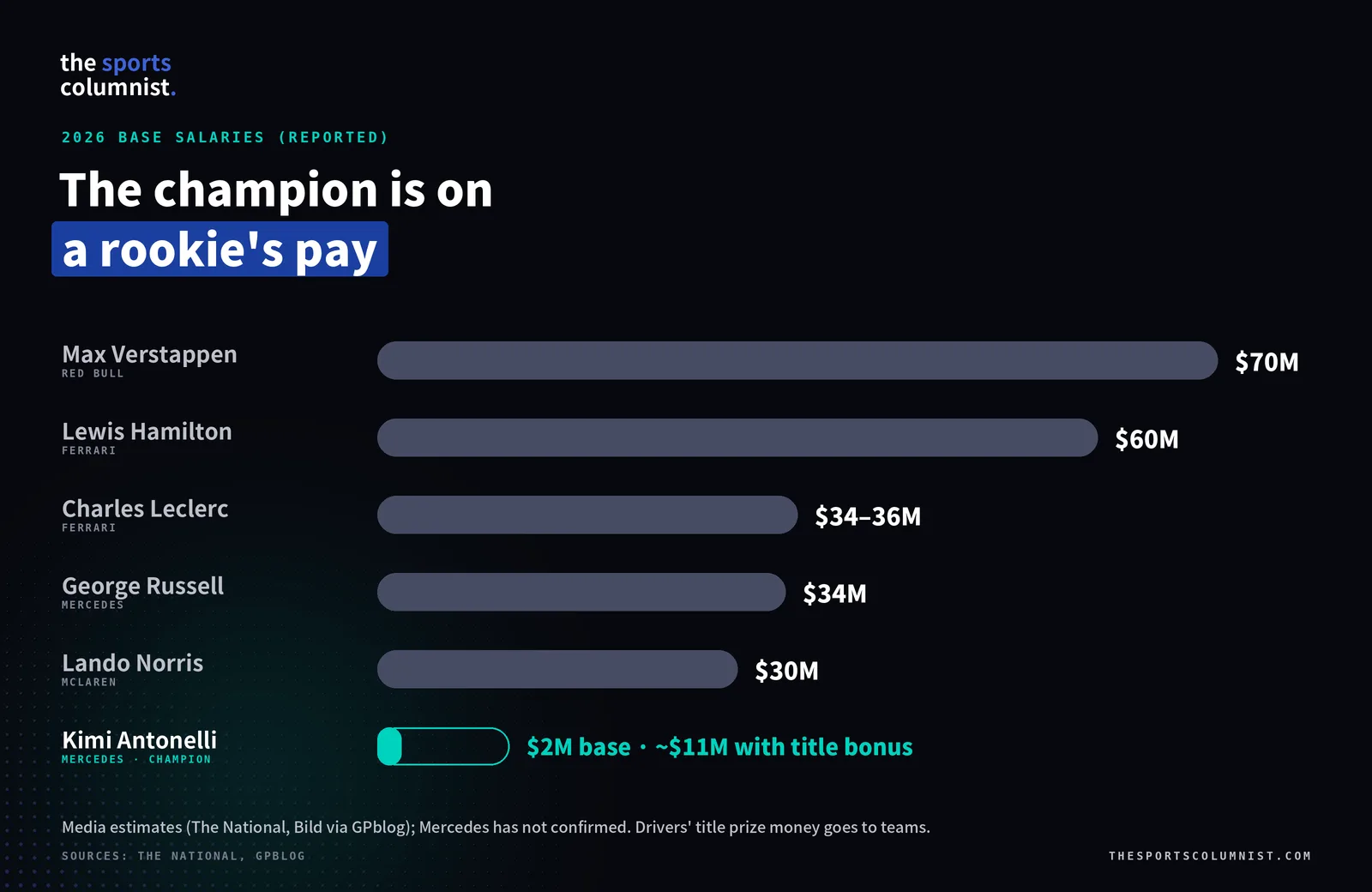
Here is the strangest number in the story. Antonelli's 2026 base salary is reported at about $2 million. Max Verstappen's is reported at $70 million, and Lewis Hamilton's at $60 million (The National).
The title changes that. German newspaper Bild reports that a Mercedes championship bonus will take his 2026 pay to just under €10 million, about $11 million, more than five times his base (GPblog). Mercedes has not confirmed the figures. Even then, at least 11 other drivers have a higher base salary.
The drivers' title itself pays no prize money; that goes to the teams. The real payday comes next: a new contract, and the sponsors who want the youngest champion in history.
For Mercedes, the timing is perfect. The team's revenue reached £633 million (about $846 million) in 2025, and The Race reports it could become the first F1 team to pass $1 billion a year (The Race). Adidas, Microsoft, Meta AI and Nasdaq have all signed recently. A champion who is 20, not 37, is a story sponsors can buy into for a decade.
Italy's 73-year wait
Italy is Ferrari's home and one of F1's biggest markets, but it had not had a world champion since Alberto Ascari in 1953. Antonelli, born in Bologna, ends that wait, and he did it in a German car.
Italian viewers had already noticed. When he won at Monza in September, an average of 4.46 million people watched on Sky and free-to-air TV8, a 39% share, Sky's best F1 audience since 2022 (Automoto.it).
The title race in Mexico drew 3.15 million unique viewers on Sky alone, its highest reach ever for a Grand Prix. Another 4 million watched TV8's evening replay. Sky says its F1 audiences are up 27% this season (ANSA).
That is what a national hero does: more viewers, higher ad rates and new sponsors. Italian brands now have a 20-year-old champion they can build campaigns around.
The second scoreboard: what India can take from it
Antonelli's title is a lesson in backing talent early, and India's sport has started to learn it.
Bet on youth, and give it time. Mercedes gave a teenager its most valuable seat and stuck with him through a learning year. In cricket, Rajasthan Royals did something similar when they bought 13-year-old Vaibhav Suryavanshi for ₹1.1 crore at the IPL 2025 auction (Wisden).
Young stars are underpriced. A champion on $2 million a year shows how much value sits in early contracts. Teams that develop their own talent capture that value; teams that buy proven stars pay full price.
A first changes a market. Italy's audience jumped once it had a winner of its own. India has no F1 driver on the grid. The country's motorsport pipeline, from karting to Formula 4, is still small. One breakthrough driver could do for Indian F1 audiences what Antonelli has done in Italy.
The money in sport follows heroes. The smartest teams find them before everyone else does.
The takeaway
Kimi Antonelli did not just break Vettel's record. He showed what a well-timed bet on youth is worth: a title for Mercedes, a hero for Italy, and a champion whose biggest pay days are still ahead of him.
At The Sports Columnist, we cover the money, deals and decisions behind sport. Every game has a second scoreboard, and for Antonelli, the bigger numbers are only just starting.
Salary figures are media estimates (Bild, via GPblog and The National) and have not been confirmed by Mercedes. TV figures are from Sky Italia data reported by ANSA and Automoto.it.
Which young Indian athlete deserves a Mercedes-style bet right now?

comments.
0 commentsNo comments yet. Be the first to join the conversation.