Milan’s clubs just sold their stadium’s name for a reported €650 million. In India, almost no stadium carries a sponsor’s name. Why stadium naming rights are so rare, and what it would take.
Across the world, a stadium’s name is one of the most valuable things a club owns. Last week, Milan’s two giant football clubs sold the name of their new home for a record fee. In India, home to some of the most-watched sport on the planet, almost no major stadium carries a sponsor’s name. Stadium naming rights in India are one of the biggest untapped opportunities in sport. Here’s why they’re so rare, and what it would take to change that.
What are naming rights?
Naming rights are simple: a company pays to put its name on a venue, usually for 10 to 25 years. The brand gets its name said by commentators, printed on tickets, shown on maps and repeated by fans, every single day, not just on match days.
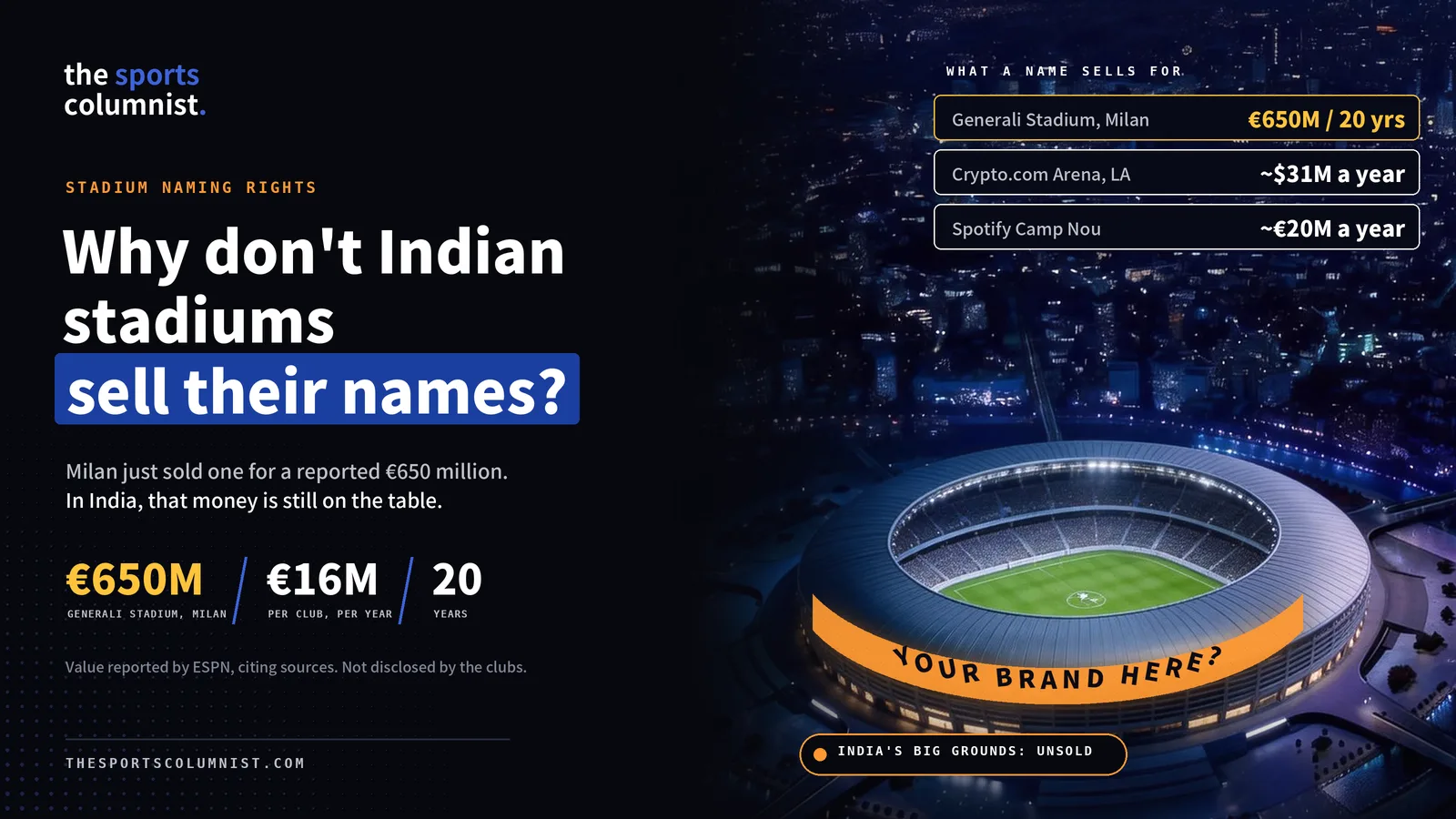
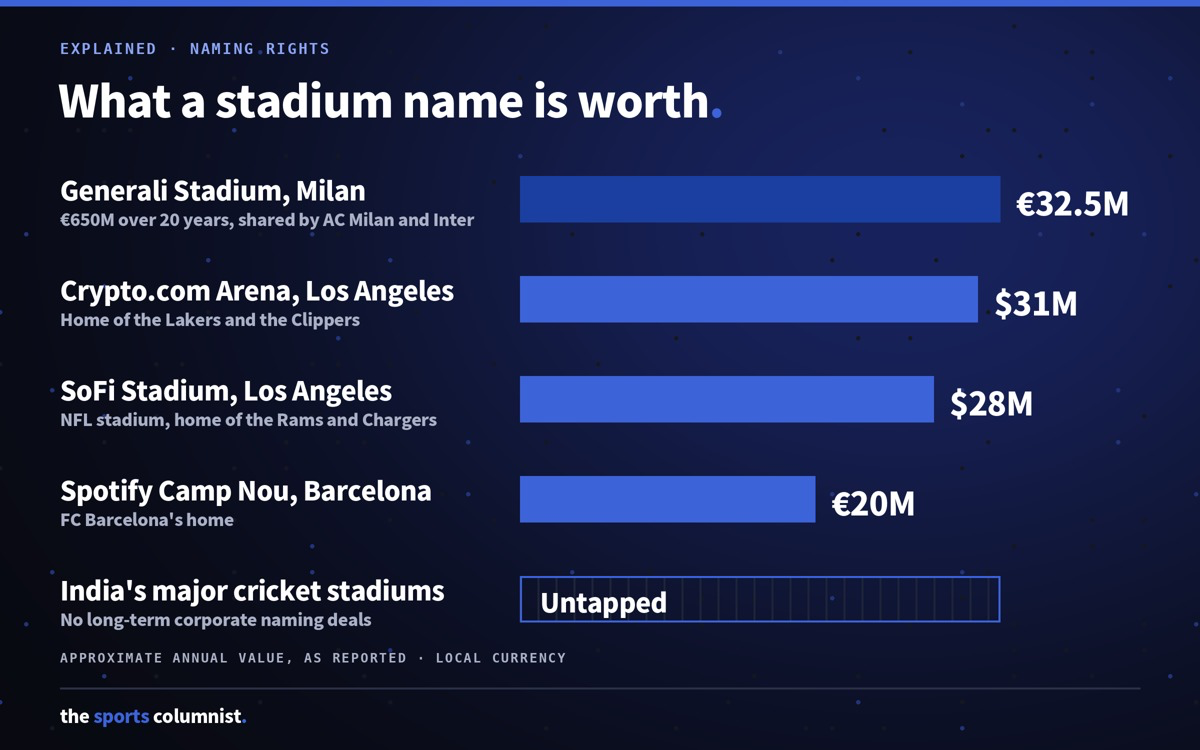
The money can be enormous. AC Milan and Inter have revealed the design for their new 71,500-seat home, confirming it will be called Generali Stadium after the Italian insurer took the naming rights. Neither club disclosed the value, though ESPN, citing sources, put it at €650m ($724m) over 20 years. That means both clubs will thus receive about 16 million euros each per season.
It’s not a one-off. The contract for the Crypto.com Arena in Los Angeles is worth around $31 million a year, that for the SoFi Stadium $28 million, whilst the recent agreement between Spotify and Camp Nou stands at around €20 million a year.
So why doesn’t India do it?
1. The teams don’t own the stadiums. In Milan, the two clubs bought their stadium, so they own the name and can sell it. In India, most big cricket grounds are run by state cricket associations or owned by governments. IPL franchises are tenants for a few weeks a year. They can’t sell a name they don’t own, and the owners have little incentive to.
2. Stadiums are named after people, not products. Indian venues are traditionally named after national leaders, administrators and cricket legends. Renaming a stadium after a company would be politically and culturally sensitive, which is why even recent renamings, such as Ahmedabad’s Narendra Modi Stadium and Delhi’s Arun Jaitley Stadium, honour public figures rather than brands.
3. Most stadiums sit empty most of the year. A naming sponsor pays for daily visibility. Many Indian cricket grounds host only a handful of international matches and an IPL season each year, with few concerts or other events. Fewer events mean fewer mentions, and a lower price.
4. Big events wipe the name off. Global events like ICC tournaments and the Olympics usually require “clean” venues, free of non-official sponsors’ branding. A naming sponsor can lose its name during exactly the events with the biggest audiences.
5. Short, uncertain terms. Naming deals need long, stable contracts. Leases, governance changes at associations, and political decisions make long-term commitments harder to sign.
The irony: Indian brands already buy names abroad
Indian companies understand the value of naming rights. They’ve just bought them overseas. For years, the Sahara group’s name was on Kingsmead in Durban, the cricket ground known as Sahara Stadium Kingsmead. In our view, that’s the clearest sign that the problem in India isn’t demand from brands. It’s the supply of venues that can be named.
What India does instead
India has found smaller ways to sell its venues:
Stands and pavilions are named after legends, such as the Sachin Tendulkar Stand at Wankhede Stadium.
Title sponsors for events take the spotlight instead of the venue, such as the TATA IPL.
Branded zones, like fan parks, hospitality boxes and gates, carry sponsors on match days.
These earn money, but nowhere near what a full naming deal could.
What it would take
1. Team-owned venues. The single biggest change would be IPL franchises, or ISL and kabaddi teams, owning or co-owning their stadiums, as Milan’s clubs now do. Ownership is what makes the name sellable.
2. Multi-purpose arenas. Indoor arenas that host kabaddi, basketball, concerts and esports all year are naming sponsors’ favourite assets, because they’re used almost every week.
3. New stadiums with naming built in. India is building new venues for the 2030 Commonwealth Games and its 2036 Olympic ambitions. Planning a naming partner from day one, as Milan did, is easier than renaming an existing landmark.
4. A hybrid model. Keep a legend’s or leader’s name, and add a presenting partner, for example “[Name] Stadium, presented by [Brand]”. It respects tradition and still creates revenue.
5. Long, clear contracts. Sponsors need 10–20 year deals, transparent governance, and data on attendance, broadcast reach and digital mentions to justify the price.
Why it matters
Stadium naming rights could become a major new revenue stream for Indian sport, money that could fund better venues, grassroots programmes and fan experiences. As India builds new stadiums and bids for global events, the question isn’t whether brands will pay. It’s whether venue owners are ready to sell.
The question that matters
Would you be comfortable with a brand’s name on an Indian stadium? Milan’s clubs will earn around €16 million each a year just from a name. In India, that money is still on the table.
At The Sports Columnist, we cover the deals, the money and the decisions behind sport. Every game has a second scoreboard, and sometimes the biggest number is written on the stadium itself.
Sources: AC Milan and Inter announcements and reported deal values, October 2026; reported naming rights values for other venues.




comments.
0 commentsNo comments yet. Be the first to join the conversation.