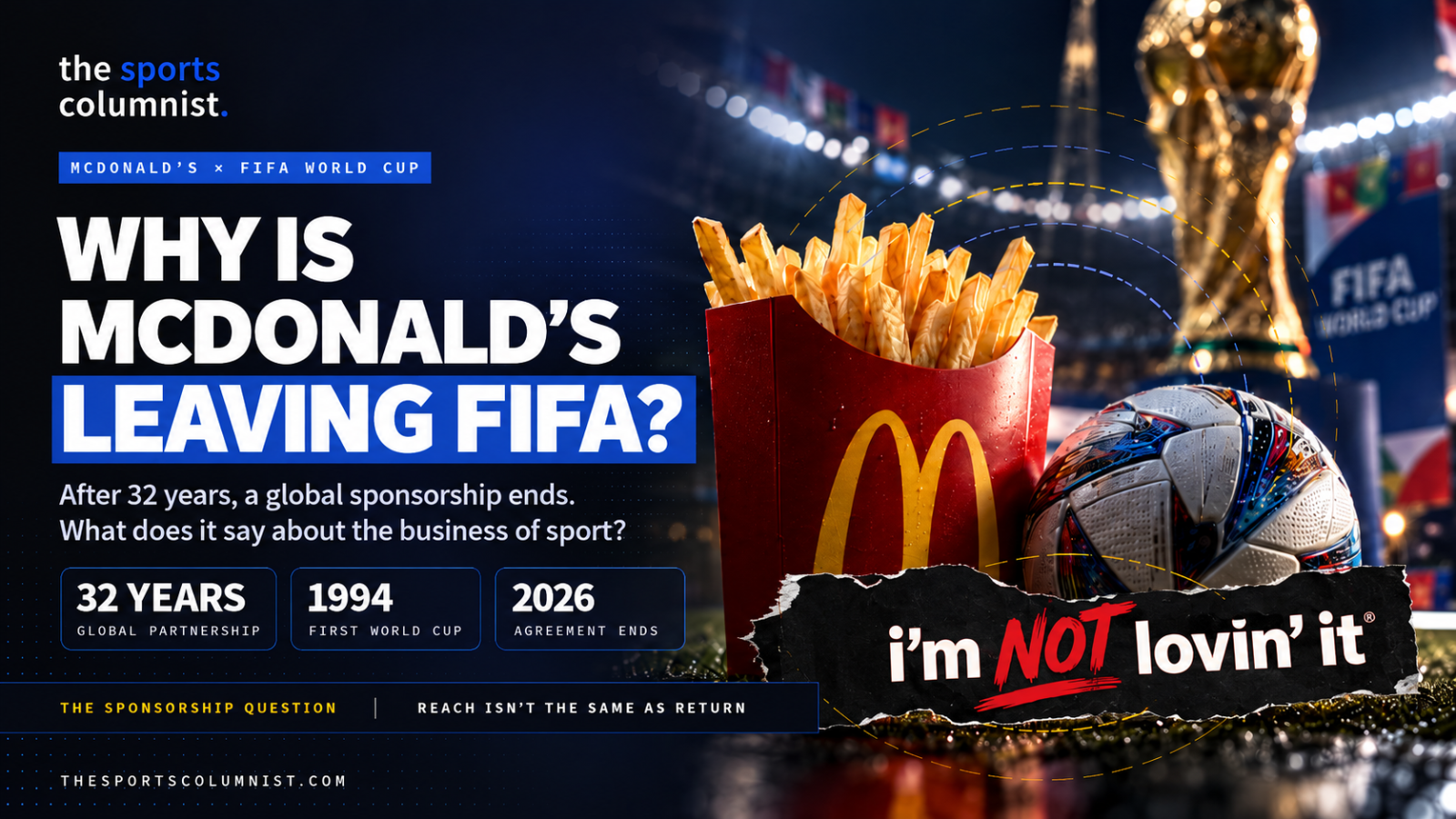
For 32 years, McDonald’s was part of the furniture at football’s biggest event. It was there in 1994 and it was there this summer. Now the McDonald’s FIFA sponsorship is ending. FIFA has confirmed that McDonald’s current agreement expires at the end of 2026. The timing is the striking part. The exit comes straight after the brand’s biggest-ever World Cup campaign. In our view, this isn’t a story about one bad tournament. It’s about one of the world’s biggest marketers deciding that renting attention is no longer worth what it costs.
What happened
McDonald’s and FIFA go back a long way. The partnership began with the 1994 World Cup in the United States. In 2023 the company renewed it, covering both that year’s Women’s World Cup in Australia and New Zealand and the 2026 men’s tournament. The deal gave McDonald’s visibility across FIFA competitions, including stadium branding and naming rights to the Fair Play Trophy.
The renewal stops there. McDonald’s will not be a FIFA partner for the 2027 Women’s World Cup or the 2030 men’s tournament.
The company has been careful about how it explains the decision. It says the move is unrelated to recent headlines about FIFA, and that it will keep investing in sport, including its long-running McDonald’s All-American Games and Ligue 1 McDonald’s in France. Global CMO Morgan Flatley’s statement was warm and backward-looking, thanking fans for three decades of memories. It said nothing about the future.
The campaign that didn’t pay back
This summer, McDonald’s went bigger than ever. Its World Cup campaign, created by Wieden+Kennedy New York, rolled out across more than 110 countries, and the company described it at the time as its largest marketing push of 2026.
Then came the verdict. On the company’s second-quarter earnings call, CFO Ian Borden said the campaign had lifted the business and generated strong enthusiasm, but had “underperformed versus our expectations”.
That matters because of what was happening underneath. US comparable sales rose just 0.8% in the second quarter, against 2.5% growth a year earlier. A global brand that spends its biggest marketing budget of the year on the world’s biggest sporting event, in its home market, and still sees growth slow, has to ask a hard question: what exactly did we buy?
We don’t know the full answer, because McDonald’s has not disclosed its FIFA sponsorship fee, its total spend on the 2026 campaign or the campaign’s precise return on investment. But a company doesn’t walk away from a 32-year partnership because it worked too well.
The real reason: “borrowed” fame
Borden’s comments point to something bigger than one tournament. The company is increasingly prioritising its own intellectual property and brand platforms over what executives have called “borrowed equities”: entertainment franchises, sporting events and cultural partnerships. Borden has warned that companies cannot simply promo their way to long-term growth through a constant schedule of outside collaborations.
That is the business logic in a sentence. Sponsoring the World Cup means paying to stand next to someone else’s fame. It works brilliantly for four weeks. Then the tournament ends, the attention moves on, and the brand has to pay again next time.
An owned property works differently. Think of a character, a meal format or a long-running youth event. You build it once, and it keeps paying you back, every month, in every market, on your own terms.
In our view, McDonald’s is making a sensible call. Very few brands need the World Cup to tell people they exist. McDonald’s is one of the most recognised brands on the planet. For a company like that, the World Cup was never really about awareness. It was about sales, and on that measure, it didn’t deliver enough.
Who wins and who loses
FIFA loses a symbol, but not much money. FIFA announced in July that its revenue had exceeded $15 billion, well above its $11 billion projection. It can replace one sponsor. What’s harder to replace is the signal: a 32-year partner leaving right after a home World Cup tells other global brands it is fine to question the price.
Rival brands get an opening. The restaurant category at the World Cup is now open. Expect fast-growing food, delivery and beverage brands to look hard at it, especially ahead of 2030.
Agencies and rights-holders face tougher buyers. If McDonald’s demands proof of return, so will others. Sponsorship sales pitches built on reach alone will struggle.
McDonald’s takes a risk too. Owned IP takes years to build. If it doesn’t land, the brand will have given up a ready-made global stage for a slower bet.
This is part of a wider shift. Sponsors are moving from exposure (logo on the board, name in the ad) to outcomes (sales, app downloads, sign-ups). The rights-holders that thrive will be the ones that can show what a partnership actually does for a business. The ones that just sell a logo position will struggle.
It is also a reminder that bigger is not always better. McDonald’s ran its largest-ever activation, and it still underperformed. Spend alone doesn’t buy results. A sponsorship has to fit a clear business goal, and it has to be measured against one.
The question that matters
McDonald’s is not leaving sport. It is leaving rented sport for sport it controls, from American high-school all-stars to a French league it names. That is a deliberate bet on owning over borrowing.
So here is the question worth asking: if a brand as big as McDonald’s can’t make the World Cup pay, which sponsors can, and what will FIFA have to change to keep them?
At The Sports Columnist, we cover the deals, the money and the decisions behind sport. Every game has a second scoreboard, and this one shows that even 32 years of loyalty ends when the numbers stop adding up.
Sources: FIFA; McDonald’s statements and second-quarter 2026 earnings call
Read more from The Sports Columnist
→ Netflix World Cup deal: why streamers want live sport
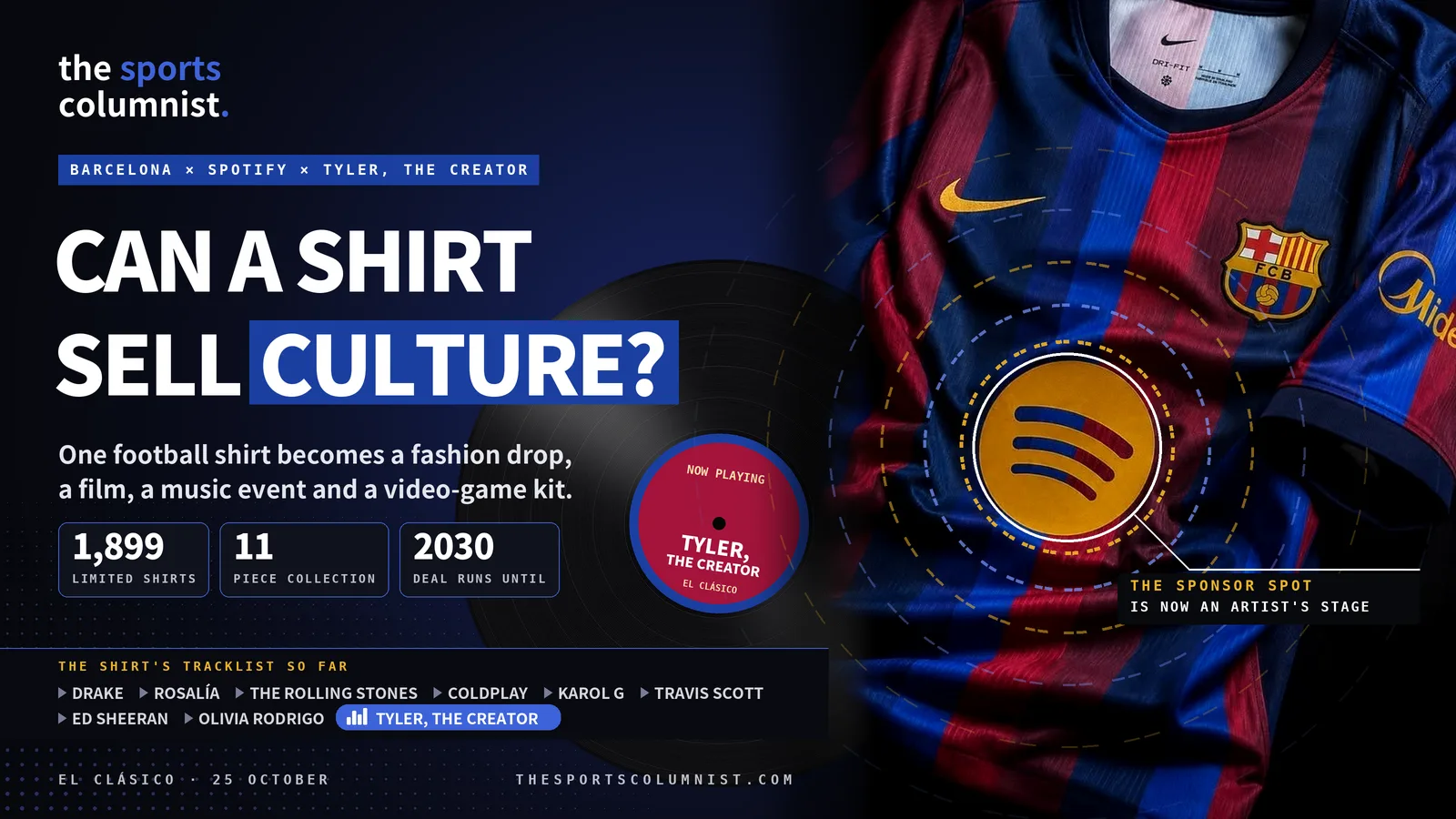
→ Barcelona Spotify Partnership: Can a Shirt Sell Culture?
→ AI can pick the team. What’s left for humans in sport?
→ Get The Dugout, our free newsletter, every Monday
comments.
0 commentsNo comments yet. Be the first to join the conversation.