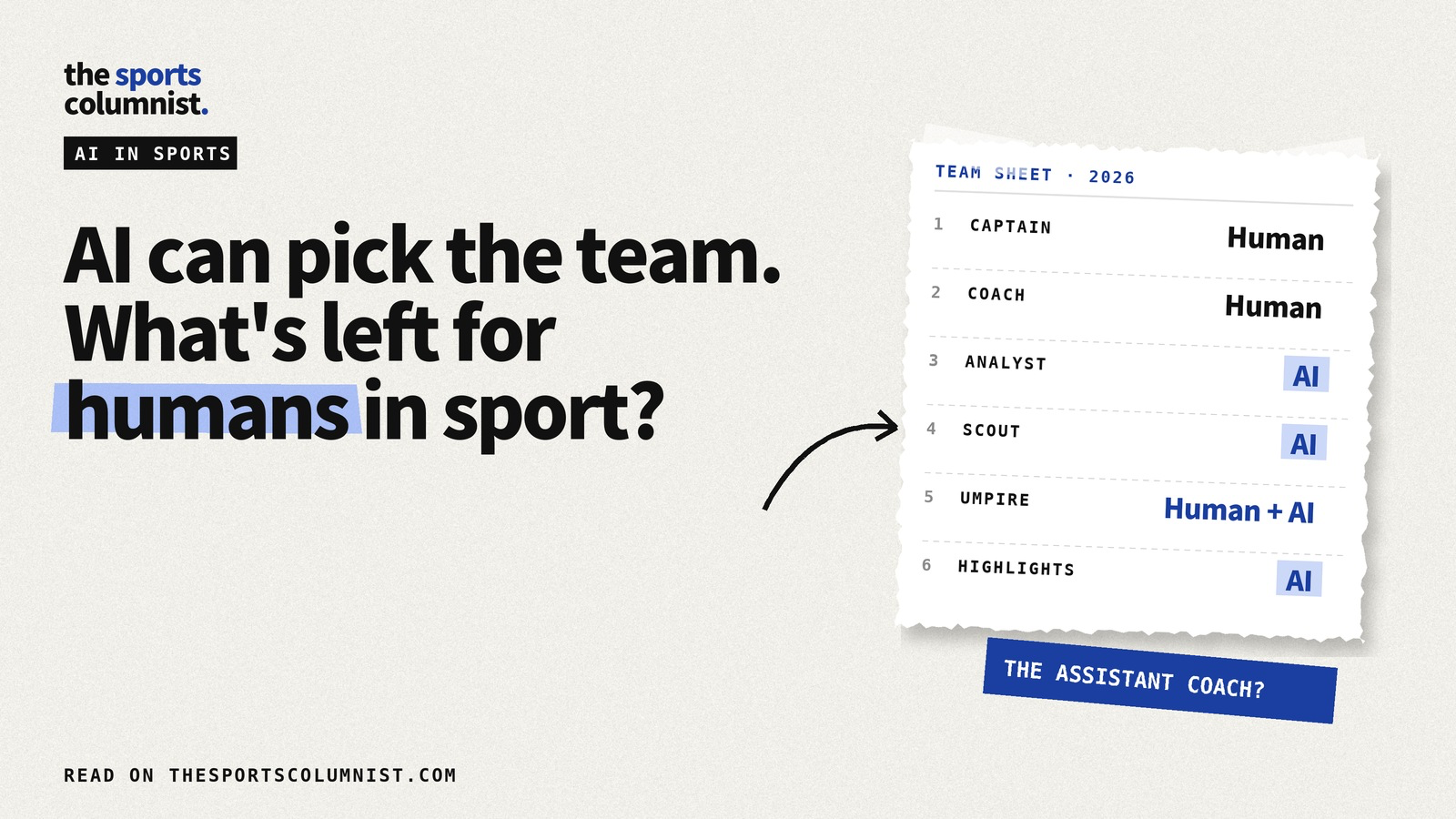
This week, the sports industry got its first serious attempt to measure something everyone has been talking about. Front Office Sports and Teamworks have released what they describe as the first industry-wide report on AI adoption, investment and impact in sports. Its makers put the problem plainly: AI is inside every pro sports building, college athletic department and international federation, but nobody had actually measured how. So it’s worth asking the bigger question now, while the answers are still being written: as AI in sports gets better at almost everything, what’s left for humans to do?
AI is already on the team sheet
It’s no longer a future story. AI already shows up across the whole game:
Performance: tracking workloads, flagging injury risk and analysing technique frame by frame
Scouting: sifting thousands of players and hours of footage to find talent humans might miss
Officiating: helping referees and umpires make faster, more accurate calls
Broadcasting and content: cutting highlights in seconds, generating stats and personalising what each fan sees
The front office: pricing tickets, targeting sponsors and predicting what fans will buy
Industry analysts now describe AI being used to protect and optimise sports organisations’ most valuable assets, their players, by assessing fitness and conditioning, predicting and preventing injuries, and using AI agents to review game film. (deloitte)
Five uncomfortable questions
This is where it gets interesting. Every one of these advances raises a question sport hasn’t fully answered.
1. If AI gets every decision right, do we lose the drama?
Fans have argued about bad calls for as long as sport has existed. Accuracy is fairer, but controversy is part of the story. A perfectly officiated game might be a slightly less human one.
2. Who’s accountable when the algorithm is wrong?
A referee can explain a decision. A model often can’t. If an AI system rules a player out, misjudges an injury or makes a call that costs a title, who takes the blame: the league, the vendor or the coach who trusted it?
3. Will AI widen the gap between rich and poor teams, or close it?
The best tools are expensive, and the richest clubs adopt them first. But there’s a counter-trend too: among the most anticipated developments of 2026 is AI-powered video analysis coming within reach of small teams. Which force wins will shape competitive balance for years. cbinsights
comments.
0 commentsNo comments yet. Be the first to join the conversation.