Most people who love sport give up on sports industry careers the day they realise they won't play professionally. That's the wrong lesson. The athlete is only the part of the industry you can see.
Think about one match. Before the first ball, someone sold the shirt sponsorship and someone else negotiated the broadcast deal. Someone priced the tickets, planned the camera angles and studied the opposition's data. Someone drafted the player's contract and someone is writing the post that goes out at full time. None of them are on the team sheet. All of them are working in sport.
India's sports economy is growing well beyond cricket: leagues in kabaddi, football and badminton, fantasy apps, sports-tech startups, athlete-led brands and new sports like pickleball. Each of them needs people who understand the game and can do a real job behind it. This piece is a map of eight of those jobs, and how to start moving towards one.
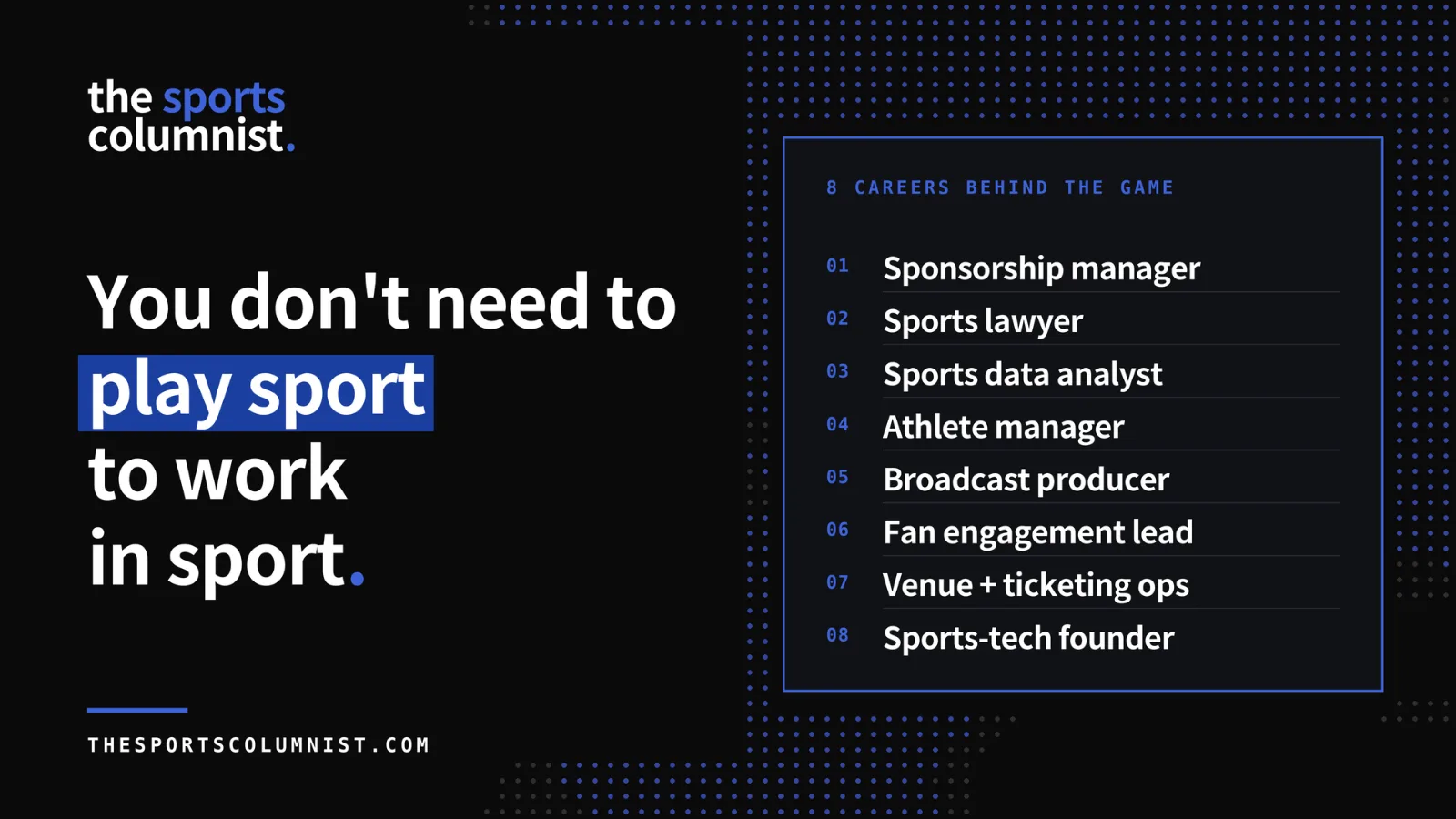
8 sports industry careers behind the game
1. Sponsorship manager
Sponsorship managers sell the shirt, the stadium and the moment. They find brands that want to reach a team's fans, build the deal, then make sure the brand actually gets what it paid for, from logo placement to matchday activations.
Skills that matter: sales, negotiation, brand thinking, relationship building. Where to start: brand or agency marketing, media sales, or a partnerships role at a league or club.
2. Sports data analyst
Data analysts turn every ball, pass and sprint into a decision. Teams use them to pick players and plan tactics. Broadcasters and fantasy apps use them to tell better stories and set better contests.
Skills that matter: statistics, Excel, SQL or Python, and the ability to explain numbers to people who don't like numbers. Where to start: build public projects on open match data, then apply to performance-analysis, fantasy or sports-tech teams.
3. Athlete manager
An athlete manager runs the business of one person. They handle endorsements, schedules, media, social channels and, increasingly, the athlete's own brands and investments.
Skills that matter: organisation, negotiation, discretion, a feel for an athlete's image. Where to start: talent-management agencies, sports marketing firms, or managing a young athlete before they break through.
4. Broadcast producer
Producers decide what millions of people see. Which camera, which replay, which graphic, which story the commentary should tell.
Skills that matter: storytelling, calm under pressure, video and live production. Where to start: production assistant roles with broadcasters, streaming platforms or league media teams; digital content teams are a faster way in.
5. Sports lawyer
Sports lawyers write the contracts behind transfers, sponsorships, broadcast rights and image rights. They also handle disputes, anti-doping cases and governance.
Skills that matter: contract law, intellectual property, dispute resolution. Where to start: a law degree, then firms with media, entertainment or sports practices, or in-house legal teams at leagues and federations.
6. Fan engagement lead
Fan engagement leads keep fans coming back after the final whistle. They run the social channels, the membership programmes, the app, the community events and the content that turns a viewer into a loyal fan.
Skills that matter: content, community building, social media, understanding what fans actually care about. Where to start: social and content roles at clubs, leagues, sports media pages or sports brands.
7. Venue and ticketing ops
This team fills the seats and runs matchday. Pricing tickets, managing gates and crowds, coordinating food, security and hospitality, and making sure a full stadium leaves happy.
Skills that matter: operations, planning, problem solving on the spot. Where to start: event management, hospitality, or volunteering at tournaments and marathons to learn how a big event really runs.
8. Sports-tech founder
Founders build what the game runs on: booking apps, smart courts, training sensors, coaching platforms, fan apps and gear brands. Bengaluru alone has a growing list of startups doing exactly this.
Skills that matter: spotting a real problem, building a product, selling it, raising money. Where to start: work at a sports startup first, learn the market, then solve a problem you've seen up close.
How to break in
There is no single entrance to the sports industry, which is good news: you can walk in from almost any field. These steps work whether you're a student or switching careers.
Bring a real skill, not just passion. Every applicant loves sport. Fewer can sell, analyse, write, film, code or run an event. Lead with the skill and let the love of the game be the reason you're there.
Pick one role and go deep. "I want to work in sports" is too wide. "I want to work in sponsorship" tells people how to help you.
Build in public. Write breakdowns of sponsorship deals, publish a data project on last season's matches, cut a highlights package, or start a page about your local league. Proof of work beats a CV.
Volunteer at events. Marathons, tournaments and league matches always need hands. You'll learn how sport really runs and meet the people who hire.
Start next to sport. Agencies, media houses, brands that sponsor sport and sports startups are all doors in. Many people in the industry started one step away from it.
Talk to people already doing the job. A short, specific message asking one good question gets far more replies than "please help me get into sports".
Follow the business, not just the scores. Know who sponsors whom, which leagues are growing and which startups just raised money. That's what interviews are really about.
The second scoreboard needs players too
Every game has two scoreboards. One shows the result on the pitch. The other tracks everything around it: the deals, the brands, the fans, the jobs. That second scoreboard is where most of sport's careers are, and it is still being built in India.
So if you love sport and never made the team, you haven't missed your chance. You've just been looking at the wrong scoreboard.
Hiring for any of these roles?
If your company has an opening in sponsorship, data, athlete management, broadcast, legal, fan engagement, venue operations or sports tech, drop it in the comments: the role, the city and a link to apply. We want this to be a place where people who love sport find their first job in it.
If you're looking, keep an eye on the comments, and repost this to help someone else break in.
Which of these eight roles would you pick? Or which one did we miss? Follow The Sports Columnist for the business side of the game, every week.
comments.
0 commentsNo comments yet. Be the first to join the conversation.