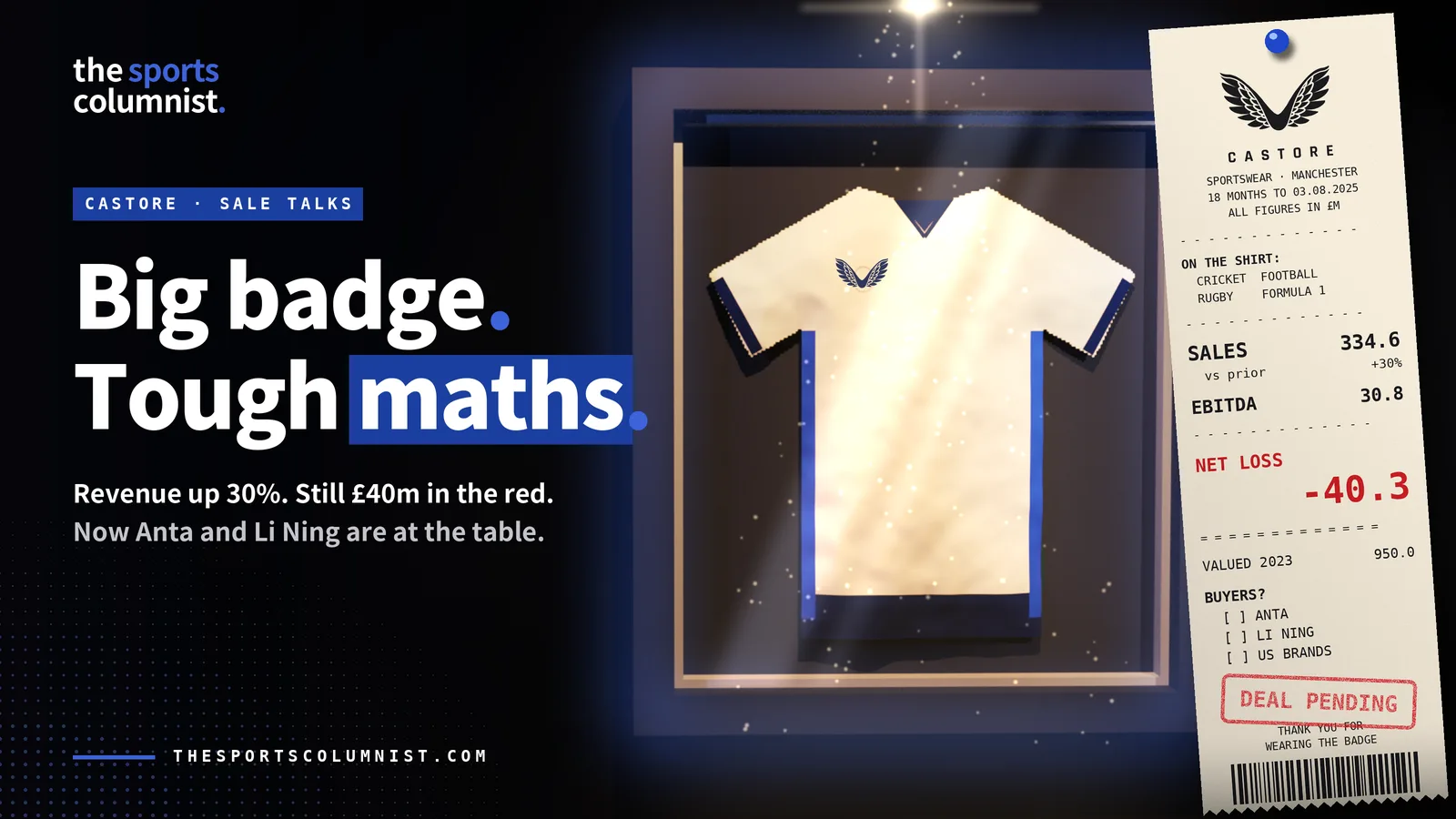
Castore has spent ten years putting its badge on some of the biggest stages in sport. Now the British sportswear brand is finding out what that badge is worth. According to the Financial Times, Castore is in talks with Chinese sportswear giants Anta Sports and Li Ning, as well as several large US footwear brands, about a sale, a minority stake or a strategic partnership (TheIndustry.fashion).
No deal has been agreed. But the talks raise one of the most important questions in sports business: can you build a profitable brand by sponsoring teams? Castore's numbers suggest the answer is more complicated than the kit deals make it look.
The sale talks at a glance
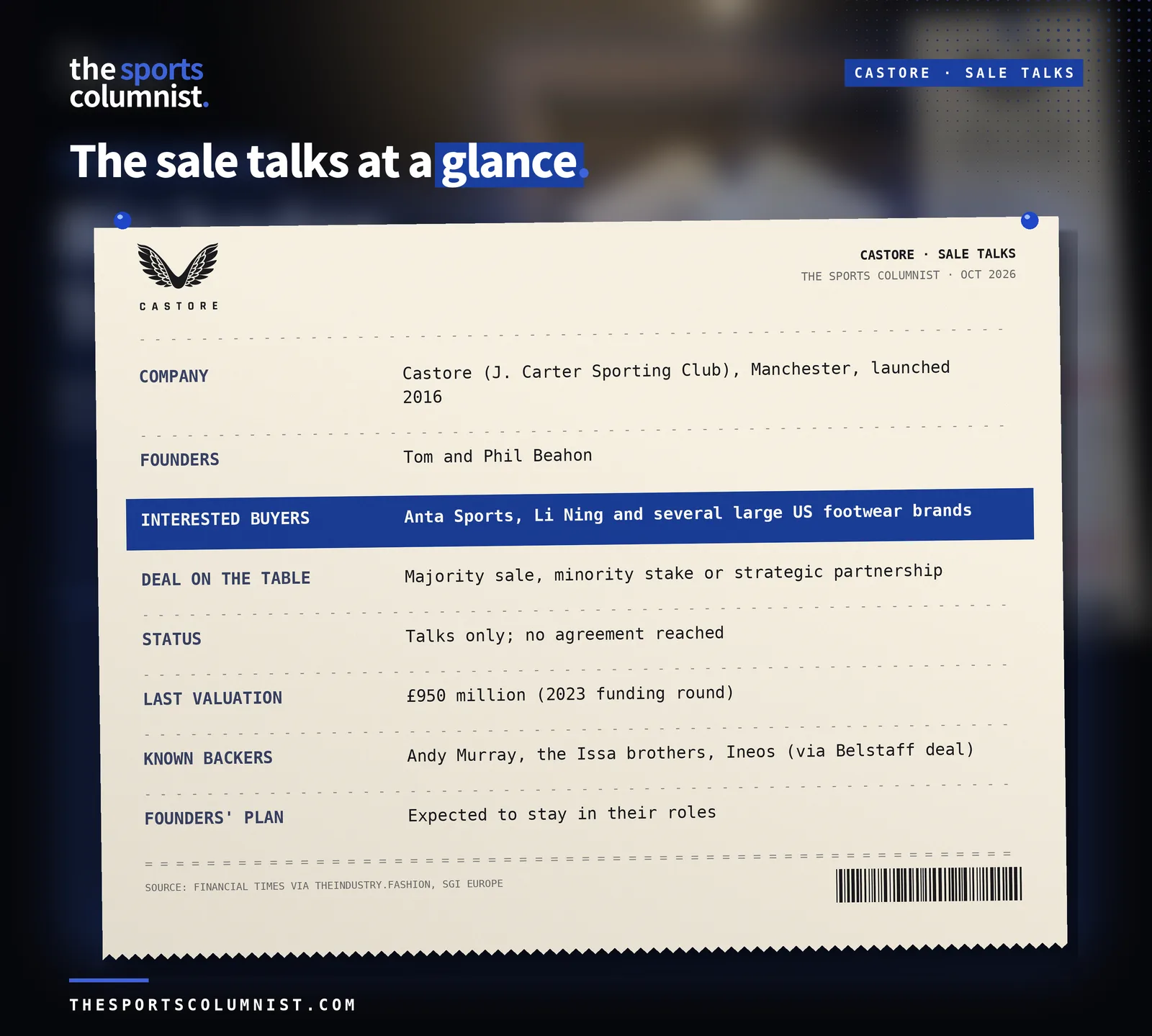
Castore was founded by brothers Tom and Phil Beahon, who started out selling premium sportswear from Manchester in 2016. Its backers include tennis champion Andy Murray and the Issa brothers, who co-own Asda. Ineos took a stake when Castore bought Belstaff from it in 2025. A deal now could give some of those investors a way out. The founders are expected to stay in their roles whatever happens.
The numbers: revenue up, profit not
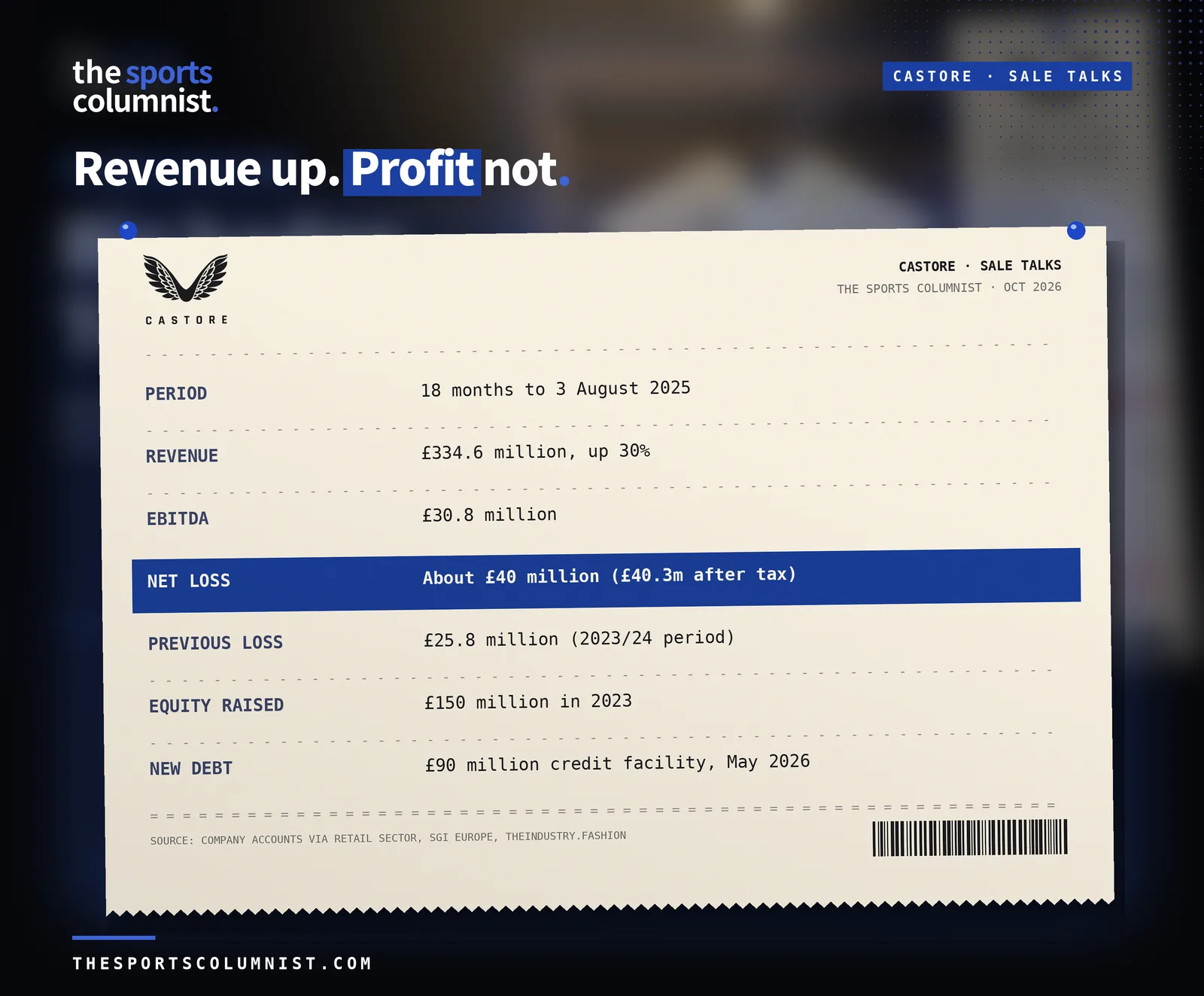
These figures cover 18 months, not a normal 12-month year, so they shouldn't be compared directly with other brands' annual results. Even so, the shape is clear. Sales grew 30% to £334.6 million, and the business made £30.8 million in EBITDA, its earnings before interest, tax, depreciation and amortisation. But after those costs, plus one-off expenses, it lost about £40 million, wider than the £25.8 million loss in its previous accounts (SGI Europe).
In plain terms: the day-to-day business makes money, but not enough to cover the cost of how fast it is growing. New stores, stock, systems, acquisitions and the interest on borrowed money all come before profit. That is the gap any buyer will be looking at.
How Castore built the brand: sponsorship first
Most sportswear brands build products, then buy visibility. Castore did it the other way round. It used team deals to become famous fast.
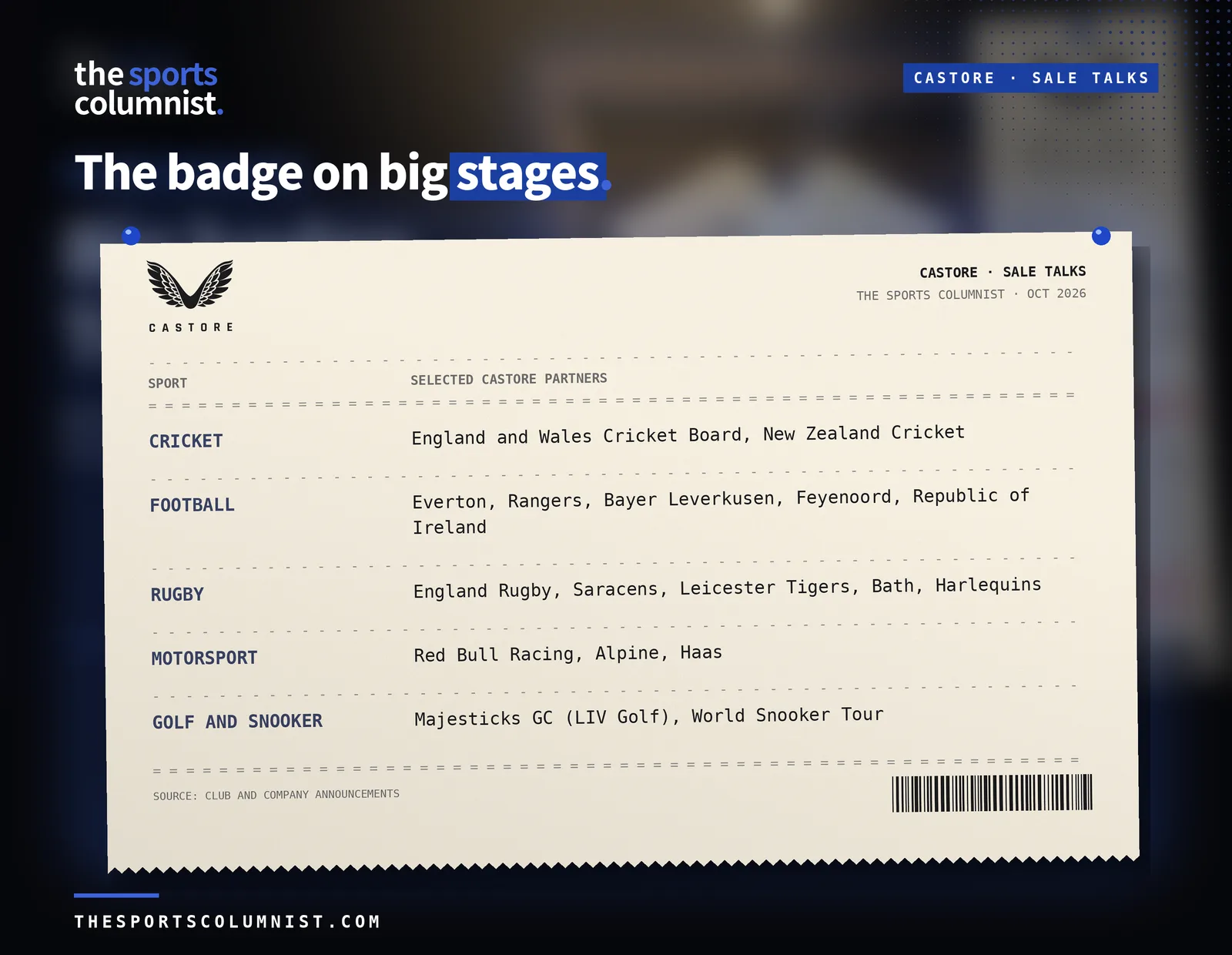
For a challenger up against Nike and Adidas, this is a shortcut. A team kit is not just clothing. It is a weekly advert worn in front of millions: on the pitch, on TV, in club shops and across social media. Fans already love the badge on the front, and some of that loyalty rubs off on the badge on the sleeve.
comments.
0 commentsNo comments yet. Be the first to join the conversation.