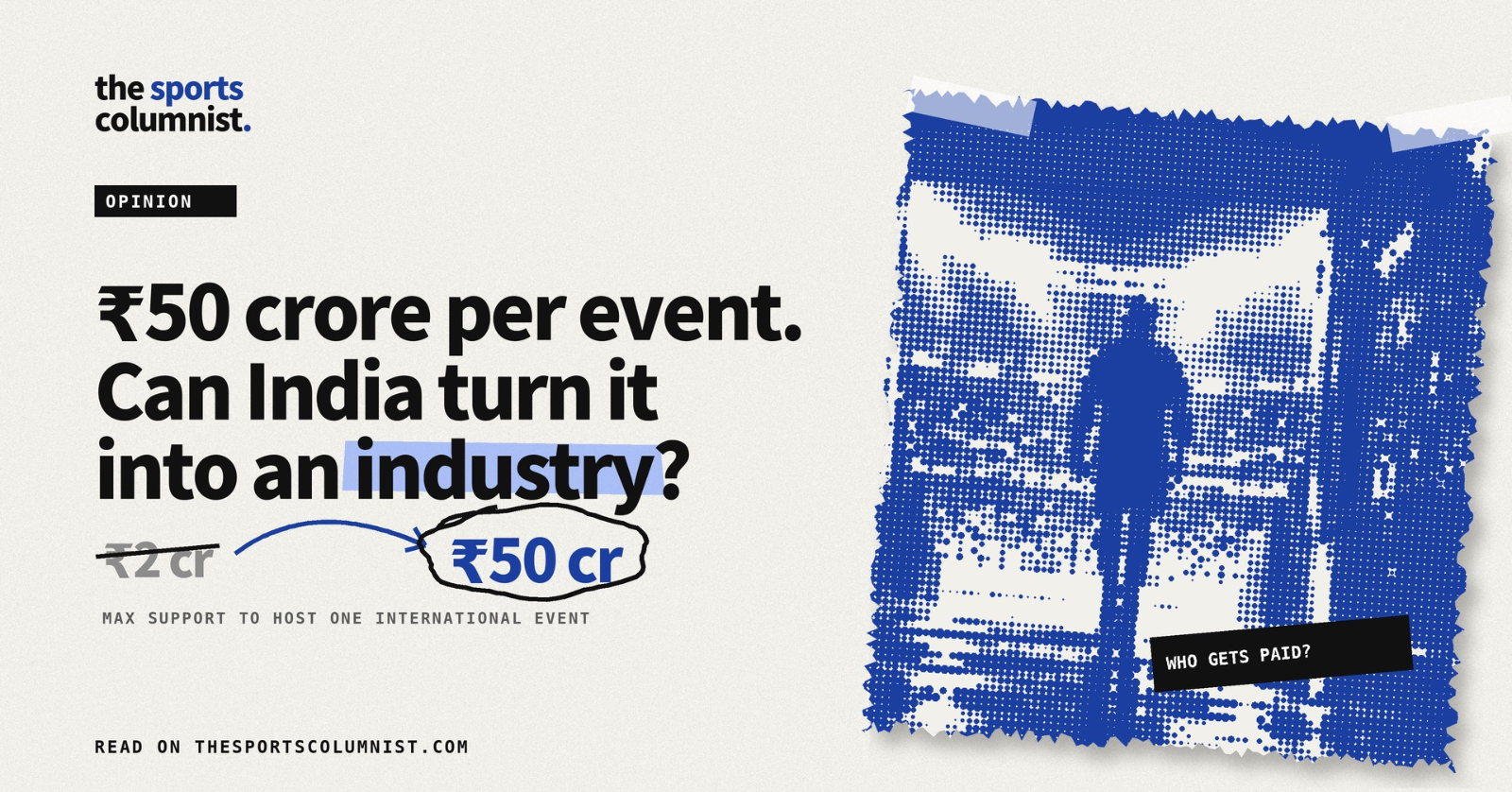
India wants to host more of the world’s biggest international sports events, and it has just put real money behind that ambition. The question is whether the money builds an industry, or just a busier calendar.
What changed
On 16 October 2026, the Ministry of Youth Affairs and Sports announced revised guidelines for its Scheme of Assistance to National Sports Federations. The headline change: financial support for hosting an international sporting event in India can now reach ₹50 crore per event, up from a ceiling of just ₹2 crore.
Two details matter. First, ₹50 crore is a maximum, not a promise. Support will depend on how significant an event is, including how many countries and athletes take part, and every proposal will be assessed by a committee headed by the Secretary (Sports). Second, it sits inside a much bigger commitment: the scheme has a total outlay of ₹7,386.74 crore from 2026-27 to 2030-31.
Why ₹2 crore was never enough
Hosting an international event is far more than booking a stadium. Federations have to coordinate venues, equipment, officials, transport, accommodation, athlete services, safety and operations. Many sports also need specialist timing systems, broadcast facilities and competition technology.
For sports without big commercial audiences, those costs have often been impossible to cover. A ₹2 crore ceiling quietly decided which events India could even bid for. Raising it to ₹50 crore changes that conversation entirely: federations can now propose bigger, more complex competitions, and compete with countries that have been hosting them for years.
The second scoreboard: who else wins
In our view, the most interesting part of this story isn’t the federations. It’s everyone around them.


comments.
0 commentsNo comments yet. Be the first to join the conversation.