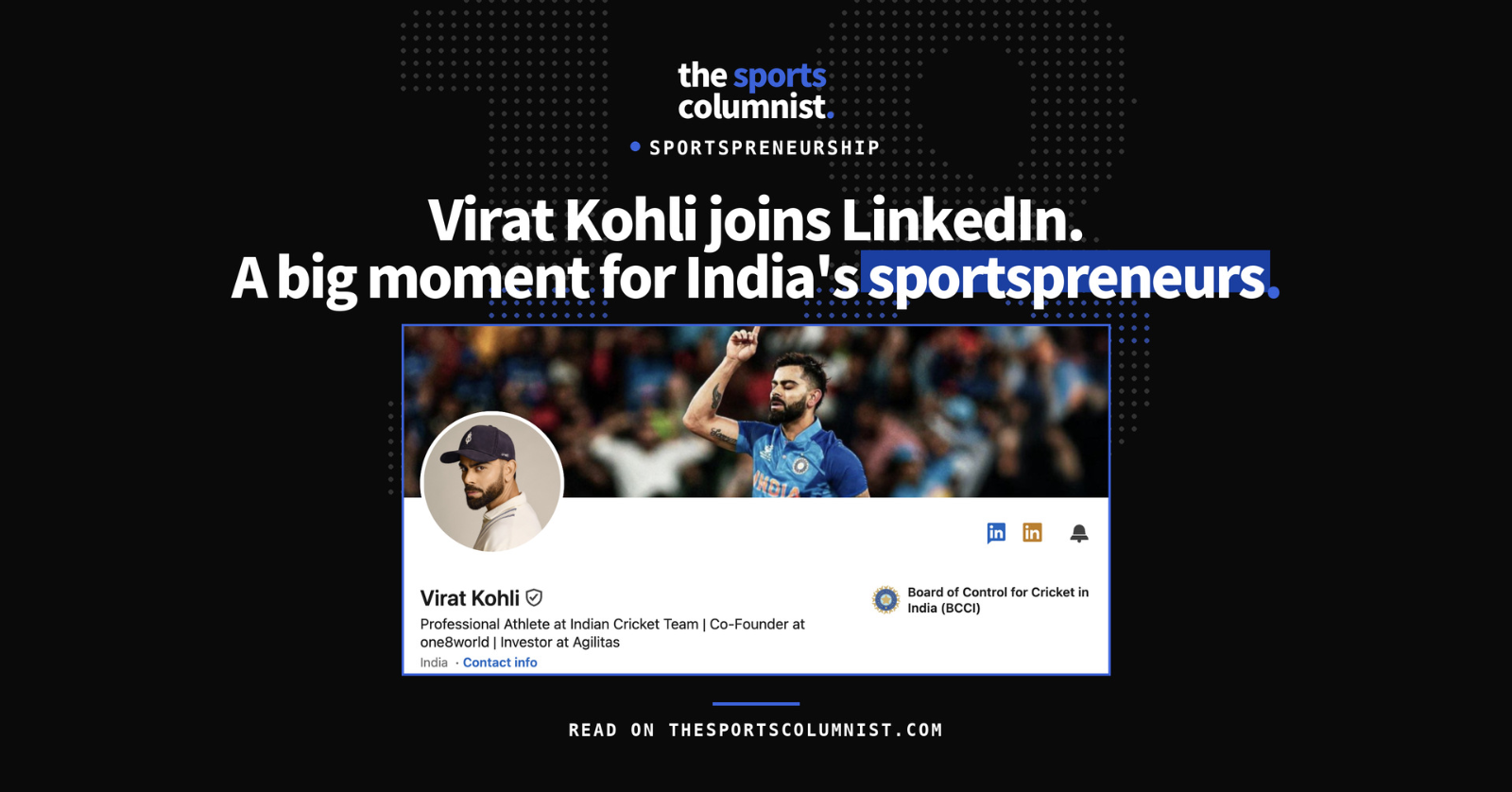
Virat Kohli joins LinkedIn, and on the surface, it is a social media update. A cricketer with one of the biggest followings in the world has opened an account on a platform better known for job changes and quarterly results. But the more interesting story isn’t about one profile. It’s about India’s sportspreneurs: the athletes, former athletes and founders turning sport into businesses of their own.
What happened
Kohli joined LinkedIn on 13 October 2026, listing his roles as a co-founder and investor alongside his cricket career. He says he will use the platform to write about leadership, team building, decision-making under pressure and the discipline it takes to keep performing over time. In his first post, he wrote that he wants to see an India where “every sport is followed, celebrated, and played.”
From endorser to owner
For most of Indian sport’s commercial history, the relationship between athletes and brands was simple. The athlete was the face on the billboard, and the brand paid a fee. It worked, and it made the biggest stars very wealthy. But an endorsement ends when the contract does.
What is changing is the model itself. More athletes now want equity, not just appearance fees: a stake in the companies they put their names to, and a say in how those companies are run. Ownership builds value that lasts long after a playing career ends. It also brings responsibility. An endorser lends a face; an owner answers for the product, the team and the results.
Why LinkedIn matters
The choice of platform tells its own story. Fans follow athletes on Instagram. Investors, executives and founders pay attention on LinkedIn. Welcoming him, LinkedIn India’s country manager pointed to a community of 185 million Indians and more than a billion professionals worldwide on the platform.
In our view, that is the point. Speaking to that audience directly is a statement: the next chapter will be judged by boardroom standards, not just batting averages. When the country’s most recognisable athlete steps into that room publicly, it changes how the rest of the industry sees athletes, from celebrities to be hired into partners to be backed.
What it means for Indian sportspreneurship
Kohli is the most visible example of a much bigger shift. Across India, athletes, former athletes and sports-loving founders are building businesses in apparel, fitness, coaching, sports technology and fan experiences. Many of them never get the spotlight.
That is why this moment matters beyond one profile. It legitimises the whole category: for founders raising money, for investors deciding where to put it, and for young athletes who now have a visible model for life after sport. It also raises the bar. A famous name can open doors, but it cannot build a product people keep buying. Execution will decide which ventures last.
The question that matters
So here is the question worth asking: will India’s athletes build brands that compete globally, or will most remain endorsers of someone else’s? The answer will shape the business of Indian sport for the next decade.
At The Sports Columnist, we cover the deals, the money and the decisions behind sport. Every game has a second scoreboard, and this is one we will be keeping a close eye on.
Read our launch piece: Who is Indian sports business really for?